Moray Eels in the Maldives: The Ultimate Guide to the Reef’s Most Misunderstood Predators
When you glide over the vibrant coral reefs of the Maldives, your eyes are naturally drawn to the neon flashes of anthias, the majestic cruise of reef sharks, and the gentle glide of sea turtles. But if you look a little closer into the volcanic crevices, deep overhangs, and coral crannies, you will likely find a pair of piercing eyes staring back at you.
The Moray Eels in the Maldives are among the most captivating, abundant, and deeply misunderstood inhabitants of this tropical paradise. With roughly 40 distinct species recorded across the archipelago, these snake-like fish are an essential pillar of the Maldivian marine ecosystem.
Whether you are a seasoned scuba diver prepping for a liveaboard trip or a snorkeler exploring a resort house reef, here is everything you need to know about encountering moray eels in the Maldives.
Why Do Moray Eels Always Look So Angry? (The Breathing Myth)
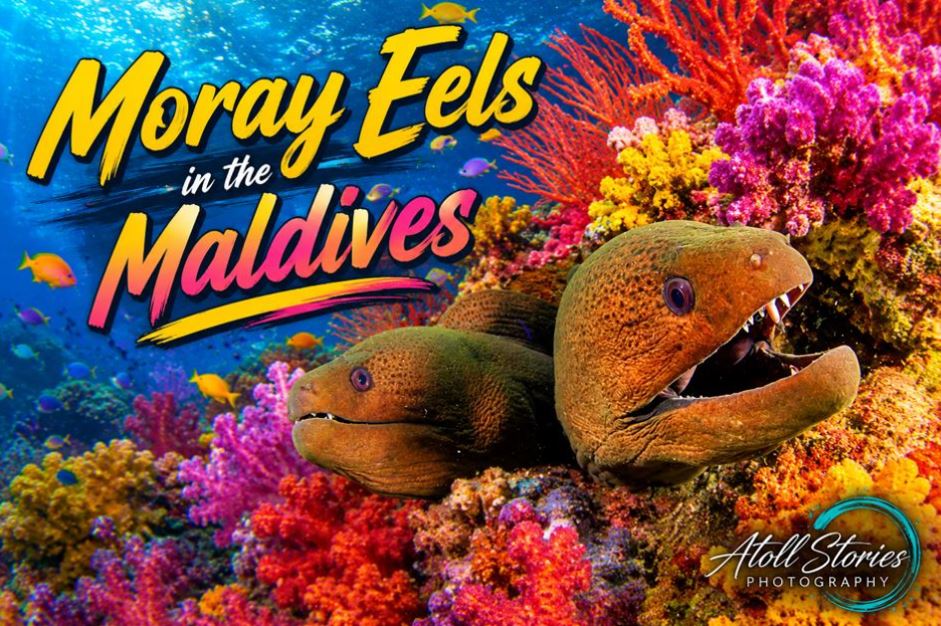
The most common image of a moray eel is a thick-necked creature half-emerged from a reef cavity, rhythmically opening and closing its mouth to display a terrifying row of razor-sharp, backward-pointing teeth.
While it looks like a clear warning sign to stay away, it is actually just breathing.
Unlike most bony reef fish, moray eels lack rigid opercula (gill covers) to pump water across their gills. To breathe, they must constantly gulp water through their mouths and force it through their gill chambers. Ironically, a moray eel with its mouth wide open is relaxed; when they are genuinely preparing to strike or defend themselves, their jaws lock shut.
Top Moray Eel Species Found in the Maldives
From tiny, colorful ribbon eels to massive apex predators, the sheer diversity of Maldives marine life means you can spot several species on a single dive. Keep an eye out for these main players:
1. The Giant Moray (Gymnothorax javanicus)
As the name suggests, this is the heavy hitter of the reef. Reaching lengths of up to 3 meters (nearly 10 feet) and weighing up to 30 kg, the Giant Moray is a true apex predator. They have a mottled brownish-tan body and are often seen during the day being serviced by cleaner wrasses.

2. The Honeycomb Moray (Gymnothorax favagineus)
A favorite for underwater photographers, the Honeycomb Moray features a striking, leopard-like pattern of black spots on a white or cream background. They are massive, docile, and highly photogenic, frequently found in current-swept channels and deep thilas (submerged pinnacles).

3. The Black-Cheek Moray (Gymnothorax breedeni)
Characterized by a distinct dark patch right behind their eyes, these smaller eels are incredibly common in Maldivian coral rubble and sponge-filled overhangs. They tend to be a bit more territorial but rarely venture far from their specific holes.

4. The Fimbriated and White-Mouth Morays
Smaller but beautifully patterned, these species add to the spectacular biodiversity of the local house reefs. They feature intricate yellow or white spotting and are masters of camouflage.

| Species | Average Length | Distinctive Feature | Best Time to Spot |
| Giant Moray | 1.5 – 3.0 meters | Large size, dark brown mottling | Daytime & Night |
| Honeycomb Moray | 1.5 – 2.5 meters | Striking black and white leopard pattern | Daytime |
| Black-Cheek Moray | 60 – 100 cm | Dark patch behind the eye, territorial | Daytime |
Fascinating Behaviors: Double Jaws and Secret Alliances
Moray eels possess some of the most unique biological traits in the ocean, making them a highlight for anyone diving in the Maldives.
The “Alien” Pharyngeal Jaw
Morays cannot create the suction needed to swallow prey whole like other fish. Instead, they possess a second set of jaws hidden deep within their throat, known as pharyngeal jaws. When the outer teeth grip a fish or octopus, the inner jaws shoot forward into the mouth cavity, bite down, and drag the prey down into the throat.
Cooperative Hunting with Groupers
In a brilliant display of marine intelligence, roving coral groupers in the Maldives have been observed actively recruiting Giant Morays to help them hunt. The grouper will perform a specific head-shaking dance at the entrance of a crevice to invite the eel out. As the moray slithers through the tight gaps of the reef, prey fish are forced out into the open water where the grouper waits—or vice versa. It’s a highly successful, mutualistic partnership.
The Cleaning Stations
Morays are highly prone to parasites due to their scaleless, mucus-covered skin. They regularly frequent “cleaning stations” along the reefs where cleaner shrimp and small wrasses enter their mouths and gill cavities completely unharmed to pick away dead skin and parasites.
Best Places and Times to Spot Moray Eels in the Maldives
Because moray eels prefer high structural complexity where they can hide, you will find them throughout the entire archipelago. However, certain environments and regions offer exceptional encounters:
- Deep Thilas & Channels: Submerged pinnacles in atolls like Vaavu, Ari, and Baa are absolute hotspots. The strong, nutrient-rich currents bring in abundance of prey, meaning larger Giant and Honeycomb morays are frequently spotted out on the sand or moving between reef structures.
- Night Diving in the Maldives: While morays spend their days resting in crevices, they are primarily nocturnal hunters. Going on a night dive reveals a completely different side of these creatures. Watching a two-meter Giant Moray free-swimming effortlessly over the reef in the beam of your dive light is an unforgettable thrill.
Diver and Snorkeler Safety: How to Interact with Morays
Are moray eels dangerous? No. They are inherently shy, solitary creatures that prefer flight over fight. However, because they have remarkably poor eyesight and rely almost entirely on their keen sense of smell, accidents can happen if human divers are careless.
Pro-Tip for Divers: Never feed moray eels and keep your hands off the reef. Because they cannot distinguish between a piece of fish and a human finger by sight alone, hand-feeding has historically led to severe bites.
If you spot one, approach slowly from the side, avoid casting a direct shadow over its lair, and give the animal its space. Respecting their boundaries ensures a safe, magical encounter with one of the Maldives’ most iconic reef residents.