The Ultimate Guide to Anemonefish in the Maldives: Finding Nemo in Paradise
If you have ever snorkeled or dived in the Maldives, chances are you’ve locked eyes with a tiny, fierce defender peering out from a cluster of swaying tentacles. Made globally famous by Pixar’s Finding Nemo, the Anemonefish (or clownfish) is one of the most charismatic marine species thriving in the Maldivian archipelago.
While they look like adorable, brightly colored swimmers, these resilient little reef dwellers lead fascinating lives. Here is everything you need to know about finding, identifying, and understanding the Maldives’ anemonefish.
1. What Types of Anemonefish Can You Find in the Maldives?
The Maldives is home to a rich diversity of marine life, and while there are nearly 30 recognized species of anemonefish globally, a few distinct species steal the spotlight in the local coral reefs.
The Maldive Anemonefish (Amphiprion nigripes)
Also known as the Blackfinned Anemonefish, this is the true star of the archipelago.
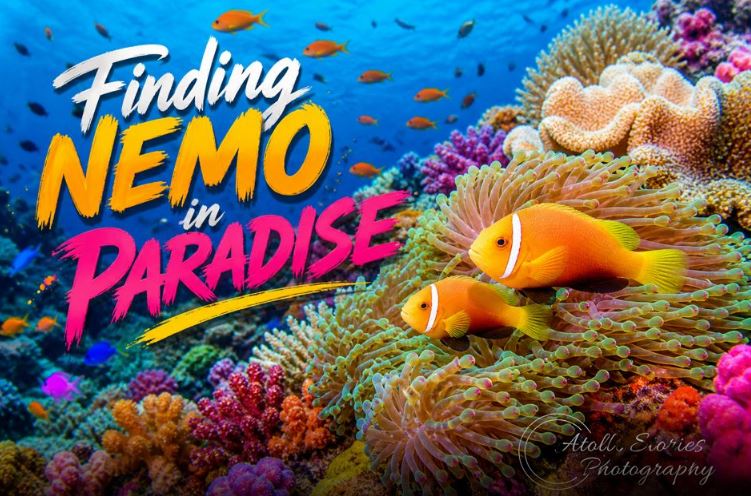
- How to spot them: They feature a vibrant orange-to-reddish body, a single bold white stripe just behind the eye, and distinctive jet-black pelvic and anal fins.
- Fun fact: This species is endemic to the Western Indian Ocean, meaning the Maldives is one of the absolute best places on Earth to see them in their natural habitat.
The Clark’s Anemonefish (Amphiprion clarkii)
The Clark’s Anemonefish is a much more widespread and highly adaptable species found throughout the Indo-Pacific.
- How to spot them: They are easily recognizable by their broader black-and-yellow bodies adorned with two or three distinct white vertical bands and a yellow or white tail.
2. The Great Symbiosis: Why Do They Live in Anemones?
You will never find an anemonefish wandering far from its host sea anemone. Their relationship is one of nature’s most flawless examples of mutualistic symbiosis—a partnership where both parties win.
       [ Sea Anemone ]  <======================>  [ Anemonefish ]
  (Provides stinging protection)             (Provides food, aeration,
                                              & aggressive defense)
- The Fish’s Benefit: Sea anemones possess stinging tentacles loaded with toxins (nematocysts) that paralyze ordinary fish. Anemonefish coat themselves in a specialized mucus layer that makes them immune to the sting. The anemone serves as an impenetrable fortress against larger predators.
- The Anemone’s Benefit: In return for the safe harbor, the anemonefish fiercely defends its host from predators like butterflyfish, which love to eat anemone tentacles. They also fan the water to improve oxygen circulation and fertilize the anemone with their waste.
3. The Shape-Shifters of the Reef: Mind-Blowing Biology
Anemonefish are protandrous hermaphrodites. This means all clownfish are born male, and they possess the ability to change their sex—but only in one direction (male to female).
They live in strict social hierarchies within a single anemone:
- The Queen: The largest, most aggressive fish in the anemone is always the dominant female.
- The King: The second-largest fish is the dominant, breeding male.
- The Non-Breeders: The remaining fish are smaller, sexually immature males.
The Plot Twist: If the dominant female dies, the breeding male undergoes a hormonal shift, grows larger, and becomes the new female. The largest of the immature males then steps up to become the new breeding male.
4. Best Snorkeling and Diving Spots to See Anemonefish in the Maldives
Anemonefish prefer relatively shallow waters where their host anemones can photosynthesize sunlight, making them incredibly accessible to both snorkelers and scuba divers.
| Location / Atoll | Why It’s Great | Best For |
| Baa Atoll (UNESCO Biosphere Reserve) | Pristine reef structures and massive biodiversity. | Snorkeling & Diving |
| Ari Atoll | Home to world-class house reefs with high anemone density. | Marine Photography |
| North & South Malé Atolls | Accessible drop-offs and shallow lagoons teeming with vibrant marine life. | Beginners & Day-Trippers |
Tips for Responsible Marine Encounters
While anemonefish are incredibly photogenic and might even swim right up to your camera mask to “charge” you, it is vital to respect their space:
- Never touch the host anemone: Human skin oils can harm the fragile creature.
- Maintain buoyancy: Ensure your fins do not scrape the coral reef or kick up sand onto the anemone.
- Observe the behavior: Watch closely, and you might see them feeding or tending to tiny orange eggs laid on the rock right at the base of the anemone.
Plan Your Maldivian Underwater Adventure
Spotting a family of Maldive Anemonefish darting through the pastel tentacles of an anemone is a quintessential vacation highlight. Whether you are exploring a resort house reef or diving deep into a marine protected area, these resilient little fish offer a captivating glimpse into the complexity of the Maldives’ coral ecosystems.
Have you ever spotted a real-life “Nemo” while exploring the reefs of the Maldives? Let us know which atoll gave you the best marine life encounters!