
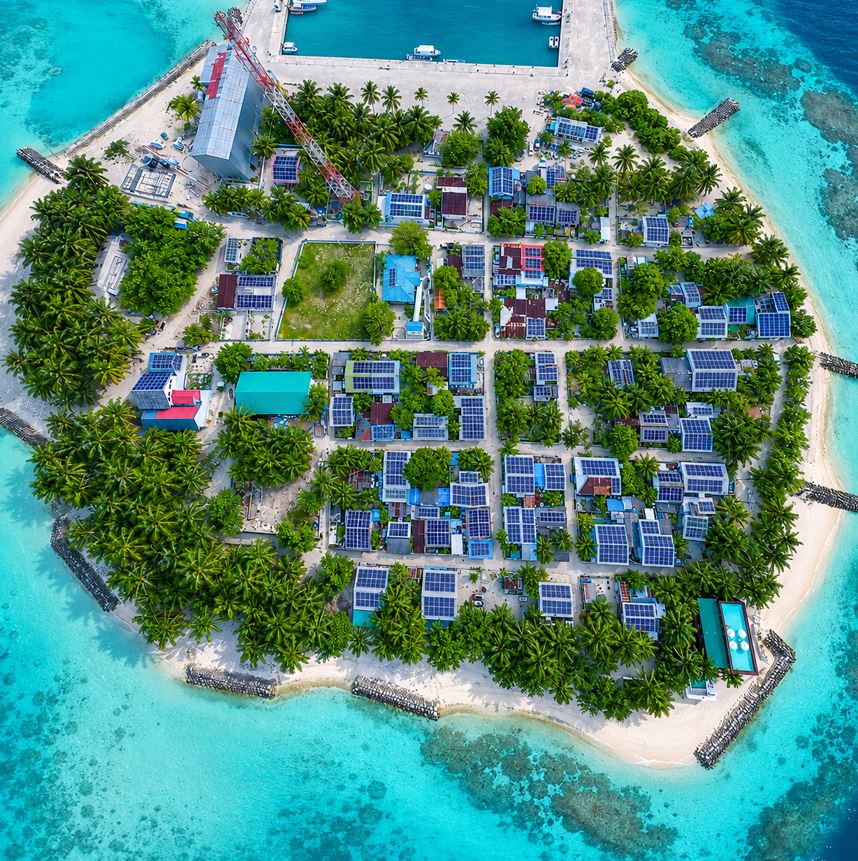
Could Solar Power Transform Vaavu Rakeedhoo?
Estimated Cost, Energy Savings & Long-Term Benefits for the Island
Rakeedhoo is one of the Maldives’ smallest inhabited islands, but it could become a strong example of sustainable island living through solar energy. With rising fuel prices and increasing electricity demand across the Maldives, installing rooftop solar panels on homes in Rakeedhoo could dramatically reduce diesel usage, lower electricity bills, and create a cleaner future for island communities.
Estimated Number of Houses in Rakeedhoo
Based on the island’s size and population estimates, Rakeedhoo is believed to have approximately:
- 110 to 140 households
- Average household size: 4–6 people
- Estimated population: 500–700 residents
For this estimate, the calculations below use:
- 130 houses
Estimated Solar Panel Installation Cost
Typical Solar Setup Per House
A normal Maldivian household would likely require:
- 5 kW rooftop solar system
- Enough to power:
- Lights
- Fans
- TVs
- Refrigerators
- Water pumps
- Small air conditioners
Estimated Cost Per House
| Item | Estimated Cost |
|---|---|
| Solar panels | $3,500 |
| Inverter system | $1,200 |
| Installation & wiring | $1,000 |
| Battery backup (optional) | $2,000 |
| Estimated total per house | $5,500 – $7,500 USD |
Total Island-Wide Estimate
For 130 homes, the estimated investment would be:
- Without batteries:
$715,000 USD - With batteries:
Around $975,000 USD
That equals approximately:
- MVR 11–15 million
How Much Electricity Could Be Saved?
Estimated Solar Power Generation
A 5 kW system in the Maldives can generate approximately:
- 20–25 kWh per day
- Thanks to strong year-round sunlight
Island-Wide Production
For 130 houses:
- 2,600–3,250 kWh daily
- Over 1 million kWh annually
This could significantly reduce diesel generator usage on the island.
Estimated Financial Savings
Electricity generation on small islands is expensive because fuel must be transported by sea.
Estimated Household Savings
Each family could potentially save:
- MVR 1,500–3,000 per month
- Depending on usage and current electricity subsidies
Island-Wide Savings
Combined yearly savings could reach:
- MVR 2–4 million annually
Over 10 years, the savings may exceed:
- MVR 20–40 million
Environmental Benefits for Rakeedhoo
Switching to solar energy would also reduce pollution and environmental damage.
Possible Benefits
- Reduced diesel fuel imports
- Cleaner air quality
- Less generator noise
- Lower carbon emissions
- Cooler rooftops due to solar shading
- Reduced risk of fuel spills near lagoons and reefs
For a small island surrounded by sensitive marine ecosystems, this is especially important.
Social & Economic Benefits for Islanders
Lower Cost of Living
Electricity is one of the biggest expenses for island households. Lower bills would help families save money for:
- Education
- Fishing equipment
- Small businesses
- Home improvements
Better Energy Stability
Solar systems can help reduce:
- Power interruptions
- Voltage fluctuations
- Generator overloads
New Job Opportunities
A solar transition could create jobs in:
- Electrical installation
- Solar maintenance
- Technical training
- Energy management
Young people from Rakeedhoo could potentially train in renewable energy fields.
Could Rakeedhoo Become a “Green Island”?
If most homes adopted solar energy, Rakeedhoo could become one of the Maldives’ leading eco-friendly islands.
Possible future additions could include:
- Solar-powered street lighting
- Electric scooters
- Solar desalination systems
- Community battery storage
- Eco-tourism branding
This could attract environmentally conscious travelers looking for authentic local island experiences.
Final Estimate
| Category | Estimate |
|---|---|
| Houses | ~130 |
| Total solar investment | $715K–975K USD |
| Annual electricity generation | 1+ million kWh |
| Annual island savings | MVR 2–4 million |
| Long-term benefits | Lower bills, cleaner environment, energy independence |
For a small island like Rakeedhoo, solar energy may not just be an environmental upgrade — it could become a major economic advantage for future generations.