Dangerous Fish in the Maldives: A Complete Guide to Marine Safety
The Maldives is world-renowned for its crystal-clear turquoise waters, vibrant coral reefs, and unparalleled diving opportunities. While the archipelago is home to some of the friendliest marine life on the planet, the Indian Ocean also hosts a few creatures that demand respect.
If you are planning a snorkeling or scuba diving adventure, knowing what to look out for ensuring a safe, unforgettable trip. Here is your definitive guide to the “dangerous” fish in the Maldives, how they behave, and how to stay perfectly safe in the water.
The Truth About Sharks in the Maldives
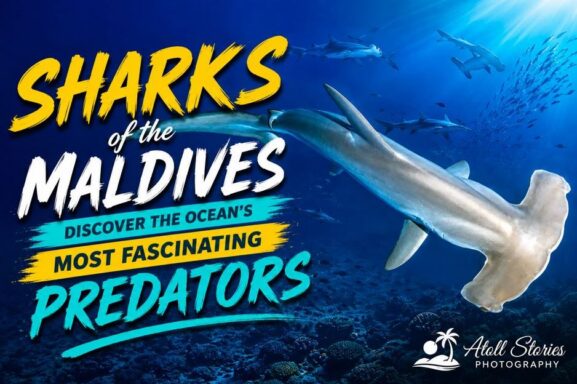
When people think of apex predators, sharks are usually the first to come to mind. However, sharks in the Maldives are highly misunderstood.
Despite their fierce reputation in popular culture, shark attacks in the Maldives are incredibly rare. In fact, over the last several decades, millions of divers and snorkelers have shared the water with these predators without incident.
💡 Safety Note: Sharks do not view humans as prey. Young sharks frequent shallow lagoons but are highly timid and will actively swim away from humans.
Whether you encounter a massive whale shark, a reef shark, or a hammerhead, they generally circle peacefully before retreating into the deep blue. Attacks only occur if a human attempts to touch, corner, or aggressively feed them. Respect their space, and they will respect yours.

8 Marine Creatures to Watch Out For
While sharks grab the headlines, smaller, camouflaged, or territorial marine species are the ones more likely to cause trouble for swimmers. Here are the creatures you should watch but never touch.
1. Titan Triggerfish (Balistoides Viridescens)
Don’t let its lack of venom fool you—the Titan Triggerfish is notoriously feisty. Growing up to 75 cm (30 inches), this fish possesses a powerful set of teeth designed to crunch coral, which can easily inflict a bite requiring medical attention.
- The Danger: During nesting season, females aggressively guard their nests in flat, sandy areas.
- The Warning Sign: If a Triggerfish faces you with its top spine erect or begins swimming sideways/horizontally, you are in its territory.
- What to Do: Swim away horizontally (flat), not upwards, as their defense zone is a cone that extends upward from their nest.
2. Stonefish (Synanceia verrucosa)
The reef stonefish is officially the most venomous fish in the world. Reaching up to 20 inches in length, their danger lies entirely in their flawless camouflage. They blend perfectly into rocks and sand, making them nearly invisible.
- The Danger: Thick dorsal spines deliver a potent neurotoxin when stepped on or pressed.
- Prevention: Never walk barefoot on reef flats or touch rocks indiscriminately. Always wear thick-soled water shoes.
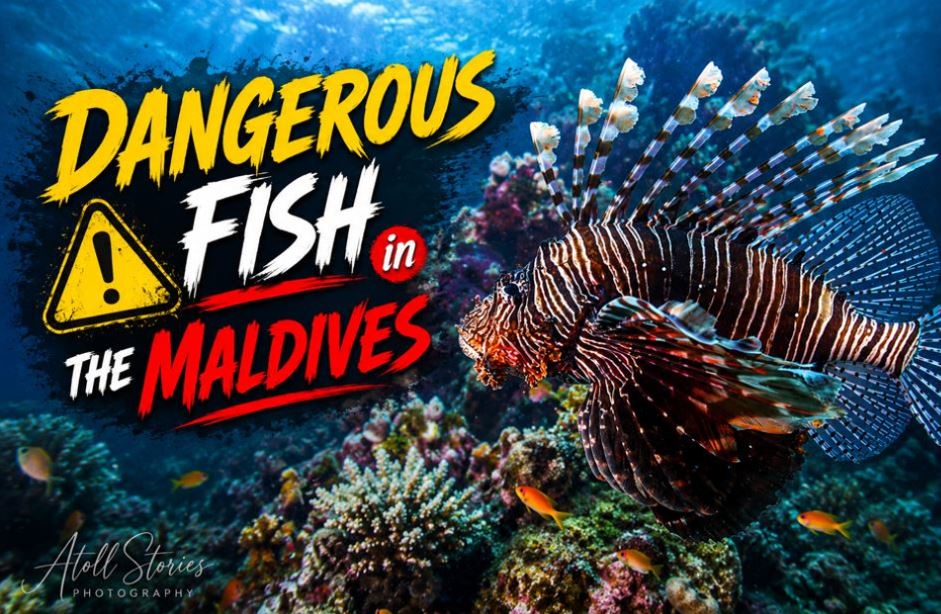
3. Lionfish (Pterois volitans)
Beautiful yet hazardous, the Lionfish (or Zebra fish) is famous for its elegant, striped appearance and fan-like fins.

- The Danger: The elegant dorsal spines contain a powerful venom. A puncture wound causes severe pain, swelling, and in extreme, untreated cases, respiratory complications.
- Behavior: They are very calm and slow-moving. They will only deploy their spines defensively if you get too close or attempt to touch them.
4. Moray Eel (Muraenidae)
Moray eels look menacing because they must constantly hold their mouths open to breathe. While they can grow up to 1.5 meters (5 feet) in the Maldives, they are inherently reclusive.

- The Danger: They have sharp, backward-pointing teeth designed to grip prey. A bite can cause deep lacerations prone to infection.
- Prevention: Never stick your hands into dark underwater crevices or caves where an eel might be resting.
5. Great Barracuda (Sphyraena Barracuda)
The Great Barracuda can reach up to 2 meters in length and features a massive lower jaw lined with razor-sharp teeth. They are curious scavengers and may follow snorkelers out of sheer curiosity.

- The Danger: Barracudas are attracted to glinting, shiny objects which they mistake for the silvery scales of prey.
- Prevention: Avoid wearing shiny jewelry, diamond rings, or reflective metallic gear while swimming.
6. Surgeonfish (Acanthuridae)
Commonly known as Tangs, these beautifully colored reef fish are strict vegetarians and completely ignore divers. However, they carry a hidden weapon.

- The Danger: They possess scalpel-like spines (called “thorn tails”) on either side of their tail.
- Behavior: If cornered or handled, they will thrash their tails, capable of inflicting deep, razor-sharp cuts.
7. Blue-Ringed Octopus (Genus Hapalochlaena)
Though tiny—measuring only 12 to 20 cm—this is one of the most venomous marine animals on Earth. They are easily recognized by the brilliant blue rings that flash across their body when threatened.

- The Danger: Their saliva contains tetrodotoxin, a deadly neurotoxin for which there is no known antidote.
- Prevention: They hide in tide pools and coral crevices. Never attempt to pick up or handle a small octopus.
8. Bluespotted Ribbontail Ray (Taeniura lymma)
Commonly found buried in the shallow sand or hiding under ledges, these stunning rays display bright blue spots to warn predators away.

- The Danger: If stepped on, the ray will whip its tail upward, driving a venomous, barbed spine into the offender. The venom is highly painful and cardiotoxic.
Comparison of Maldives Marine Hazards
| Marine Creature | Primary Danger | Behavior/Trigger | Prevention Tip |
| Titan Triggerfish | Powerful, crushing bite | Defending its nesting territory | Swim away horizontally |
| Stonefish | Highly toxic dorsal spines | Accidental stepping/touching | Wear reef shoes; don’t touch rocks |
| Lionfish | Venomous fin spines | Defensive when cornered | Maintain a safe viewing distance |
| Great Barracuda | Sharp teeth / Mistaken identity | Attracted to shiny objects | Remove jewelry before swimming |
| Blue-Ringed Octopus | Deadly neurotoxin (No antidote) | Defensive when handled | Never touch or pick up |
| Bluespotted Ray | Venomous tail spine | Accidental stepping | Do the “stingray shuffle” in shallow sand |
Bonus: Watch Out for Fire Coral (Millepora)
While not a fish, Fire Coral is a common hazard in the Maldives. Despite its name, it is actually a hydrocoral (closer to jellyfish).

- The Sting: Brushing against its sharp, calcified skeleton scrapes the skin while its microscopic tentacles deliver a fiery, intense sting that can throb for weeks.
- Rule of Thumb: Perfect your buoyancy control so you never accidentally drift into the reef structure.
Simple Golden Rules for Maldives Marine Safety
Enjoying the incredible biodiversity of the Indian Ocean is completely safe if you follow a few basic guidelines:
- Look, Don’t Touch: Never touch, poke, or chase any marine animal.
- Maintain Perfect Buoyancy: Keep your fins and hands away from the reef floor to avoid stepping on stonefish or rays.
- Ditch the Jewelry: Leave shiny rings, chains, and watches in your resort safe.
- Don’t Feed the Fish: Feeding alters natural behaviors and can attract predators or spark territorial aggression.
- Research Your Dive Site: Ask your local dive master about the current marine residents before jumping in.
The underwater world of the Maldives is an incredibly welcoming environment. By practicing responsible tourism and respecting the boundaries of its residents, you will enjoy a thrilling, injury-free aquatic adventure.
Ready to Plan Your Maldives Adventure?
Discover the best ways to experience the marine life safely by booking your stay at premium dive resorts or experiencing the deep blue via elite liveaboards like the Scubaspa Yang, Emperor Serenity, or Maldives Aggressor II. Have you ever had a close encounter with a reef resident?