Sea Turtles in the Maldives: Best Snorkeling Spots, Species, and Conservation Guide
The Maldives is famous for its overwater villas and pristine white-sand beaches, but beneath its turquoise waters lies a bustling marine paradise. Among the most enchanting residents of this underwater world are sea turtles.
Whether you are an avid scuba diver, a casual snorkeler, or an eco-conscious traveler, encountering a sea turtle in the Maldives is a bucket-list experience. This guide covers everything you need to know about Maldivian sea turtles, from the species you will encounter to the absolute best spots to find them.
Which Sea Turtle Species Live in the Maldives?
Out of the seven sea turtle species in the world, five have been recorded in the Maldives. However, two species dominate the local coral reefs and seagrass meadows:
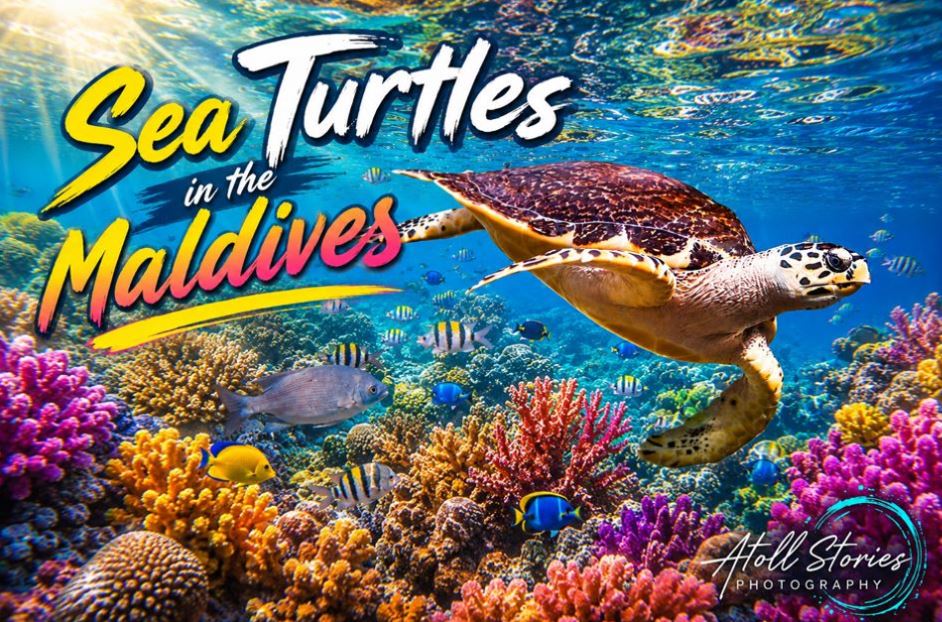
1. The Hawksbill Turtle (Eretmochelys imbricata)
- Status: Critically Endangered
- Where to find them: Foraging along coral reefs.
- How to identify them: They have a distinctive, narrow, beak-like mouth (resembling a hawk) and a beautifully patterned, overlapping shell.
- Fun Fact: Hawksbills love eating sea sponges, making them vital for keeping the coral reef ecosystem balanced.

2. The Green Sea Turtle (Chelonia mydas)
- Status: Endangered
- Where to find them: Near lush seagrass meadows and lagoon overhangs.
- How to identify them: Larger than hawksbills, with a smooth shell and a more rounded snout. Despite their name, their shells are usually brown or olive, but they get their name from the greenish color of their cartilage and fat (due to their strictly vegetarian adult diet).
The Rare Visitors
The other three species found in Maldivian waters are pelagic (open ocean) travelers and are rarely seen near the shore:
- Olive Ridley Turtles: Mostly encountered in the open sea or when rescued from drifting, discarded fishing nets (“ghost nets”).
- Loggerhead Turtles: Very rarely sighted.
- Leatherback Turtles: The largest of all sea turtles, occasionally spotted passing through deep oceanic channels.
Best Places to Swim with Sea Turtles in the Maldives
While sea turtles can be spotted across almost all of the 26 atolls in the Maldives, a few specific regions are known as reliable “hotspots” due to their protected status and abundant food sources.
| Hotspot / Atoll | Primary Turtle Species | Why It’s Special |
| Baa Atoll (UNESCO Biosphere Reserve) | Hawksbill & Green Turtles | Famous for its rich biodiversity; turtles can be found year-round along its healthy reef slopes. |
| Lhaviyani Atoll (e.g., Kuredu Caves) | Green Turtles | Home to a massive, resident population of green sea turtles that gather to sleep under reef ledges and graze on seagrass. |
| Laamu Atoll | Green Turtles | A critical nesting and foraging ground, particularly around the historic island of Gaadhoo. |
| Ari Atoll | Hawksbill Turtles | Excellent underwater visibility and countless marine protected areas make encounters here incredibly frequent. |
Sea Turtle Nesting and Hatching in the Maldives
Did you know that sea turtles nest year-round in the Maldives? Nesting activity typically peaks between June and September during the southwest monsoon.
Female green turtles return instinctively to the exact beaches where they were born to lay their eggs. After an incubation period of roughly 59 days, tiny hatchlings emerge from the sand and make a frantic dash for the ocean.
If you stay at a resort during these months, you may be lucky enough to witness a controlled, protected hatching event organized by local marine biologists.
Threats and Conservation Efforts
Despite being a major draw for the multi-million dollar tourism industry, Maldivian sea turtles face steep survival challenges. Climate crisis-induced coastal erosion and rising tides frequently flood nests, while marine plastic and illegal poaching still pose lingering threats.
A Victory for Marine Life: Sea turtles, their eggs, and their habitats have been fully protected under Maldivian law since 2016. It is strictly illegal to capture, harm, or keep them as pets.
The Role of Citizen Science
Organizations like the Olive Ridley Project (ORP) work tirelessly across the archipelago, running rehabilitation centers for injured turtles (especially those hurt by ghost nets) and tracking populations using photo-identification. Because the facial scales of a turtle are as unique as a human fingerprint, marine biologists can identify specific individuals simply from a tourist’s photo!
Responsible Eco-Tourism: How to Swim with Turtles Safely
If you find yourself snorkeling alongside one of these ancient mariners, it is vital to practice responsible marine etiquette to ensure they do not become stressed:
- Keep Your Distance: Always maintain a distance of at least 2 meters (6 feet).
- Do Not Touch: Touching a turtle can transfer harmful bacteria or startle them, causing them to drown if they are startled while ascending for air.
- Never Block Their Path: Turtles need to swim to the surface to breathe. Always swim parallel to them, never directly above or in front of them.
- Turn Off the Flash: If you are taking underwater photos, disable your camera’s flash to avoid blinding or disorienting the animal.
Plan Your Maldives Adventure
Encountering a sea turtle in the wild is a transformative travel experience. By choosing eco-conscious resorts with active marine biology programs and respecting the ocean’s boundaries, you can ensure that these magnificent creatures continue to graze on the Maldivian reefs for generations to come.