Spotting Bannerfish in the Maldives: Your Ultimate Snorkeling & Diving Guide
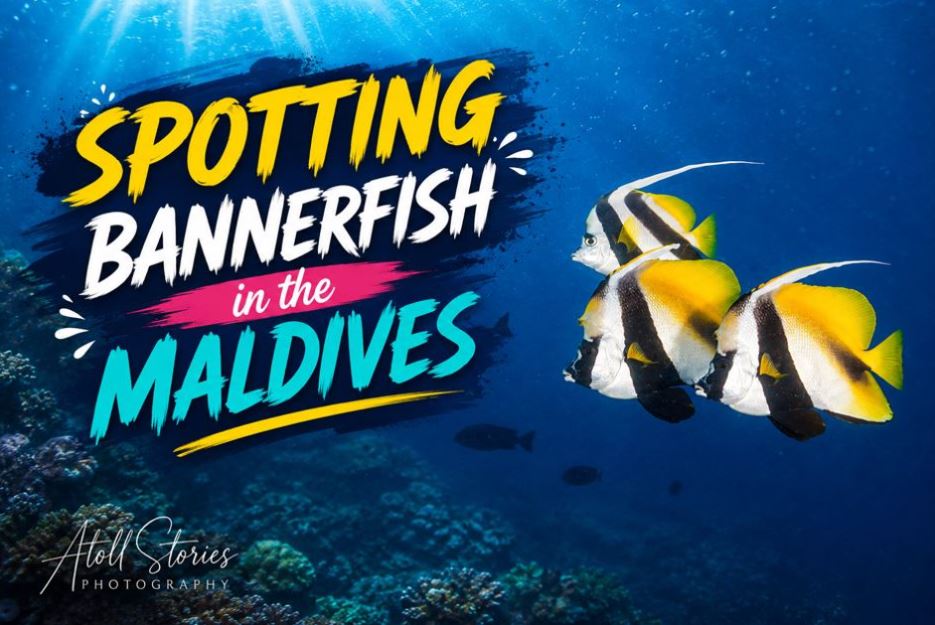
The Maldives’ coral reefs shimmer with biodiversity, but few creatures capture the imagination like the elegant Bannerfish (Heniochus spp.). With their striking black-and-white bands and flowing, thread-like dorsal filaments, these tropical icons adorn the Indian Ocean’s blue canvas.
Whether you are a seasoned scuba diver or a casual snorkeler, encountering these graceful swimmers is a quintessential Maldivian experience. Here is your ultimate guide to finding, identifying, and photographing Bannerfish in the Maldives.
Meet the Bannerfish: The Maldives’ Striped Ambassador
Belonging to the Chaetodontidae family (butterflyfish), Bannerfish are among the most photogenic marine species in the Indo-Pacific.
Key Characteristics
- Signature Look: Vertical black bands contrast sharply against white and vibrant yellow bodies, topped by a dramatic, elongated dorsal filament that resembles a banner waving in the wind.
- Social Nature: They are highly social creatures, often seen traveling in pairs or forming large, synchronized schools fluttering near coral formations.
- Ecological Role: Feeding primarily on plankton, coral polyps, and small invertebrates, they play a vital role in maintaining the delicate balance of the reef ecosystem.
In the Maldives, the Longfin Bannerfish (Heniochus acuminatus) and the Schooling Bannerfish (Heniochus diphreutes) are the most common species you will encounter gliding through sheltered lagoons and outer reef slopes.
Top Dive & Snorkel Sites to See Bannerfish in the Maldives
While Bannerfish inhabit reefs across all 26 atolls, certain marine protected areas (MPAs) and famous dive sites offer guaranteed, high-density encounters.
+-----------------------------+---------------------+---------------------------------------------------+
| Dive Site                   | Atoll               | Best For                                          |
+-----------------------------+---------------------+---------------------------------------------------+
| Banana Reef                 | North Malé Atoll    | Beginners, Snorkelers, and Schooling Bannerfish   |
| HP Reef (Rainbow Reef)      | North Malé Atoll    | Advanced Divers, Soft Corals, Strong Drift Currents|
| Manta Point (Lankan Finolhu)| North Malé Atoll    | Multi-species encounters (Mantas & Bannerfish)    |
| Alimatha Island             | Vaavu Atoll         | Night Diving and Overhang Exploration              |
| Fotteyo Kandu               | Vaavu Atoll         | Deep Channels, Caves, and Macro Photography       |
+-----------------------------+---------------------+---------------------------------------------------+
1. Banana Reef (North Malé Atoll)
As one of the first internationally recognized dive sites in the Maldives, this crescent-shaped reef is a legendary Bannerfish hotspot.
- The Experience: Massive schools of Bannerfish drift alongside Moray Eels, Giant Squirrelfish, and Napoleon Wrasse within coral-rich canyons and dramatic overhangs.
- Depth & Conditions: 5 to 30 meters; gentle currents make it ideal for both beginners and snorkelers.
2. HP Reef / Rainbow Reef (North Malé Atoll)
This submerged pinnacle (thila) is a vibrant explosion of life, renowned for its spectacular soft coral gardens.
- The Experience: Bannerfish school by the hundreds here, weaving through neon-colored soft corals and clouds of orange anthias.
- Depth & Conditions: 10 to 40 meters; intermediate to advanced certification is recommended due to strong, nutrient-rich currents.
3. Manta Point (North Malé Atoll)
While global travelers flock here to watch reef manta rays queue up at cleaning stations, the shallow coral reef flat is a bustling nursery for reef fish.
- The Experience: Look down during your safety stops or casual snorkel sessions to see pairs of Bannerfish methodically picking at the hard coral structures.
Bannerfish vs. Moorish Idol: How to Tell the Difference
It is the most common mistake made by underwater enthusiasts: confusing the Bannerfish with the Moorish Idol (Zanclus cornutus) (famously known as “Gill” from Finding Nemo). While they look incredibly similar at a glance, they belong to completely different families.
Here is how to distinguish them instantly:
- The Snout: Moorish Idols have a long, tubular, prominent snout with a bright orange saddle-like patch across the top of it. Bannerfish have a much shorter, classic butterflyfish profile.
- The Tail Fin: Look at the caudal fin (tail). A Bannerfish features a bright yellow tail fin, whereas a Moorish Idol sports a distinct, jet-black tail fin.
- The Markings: Moorish Idols have a third, dark black-to-gradient band covering their tail region, whereas Bannerfish display clear-cut, sharp black-and-white vertical stripes transitioning to a yellow rear.
Underwater Photography Pro-Tips for Bannerfish
Capturing the perfect shot of a Bannerfish requires patience, as their flowing dorsal fins are highly sensitive to water movement.
- Approach with the Current: Do not swim directly at them. Let the current drift you toward the school slowly, keeping your fins steady to avoid spooking them.
- Shoot Upward for Contrast: Position yourself slightly below the fish and shoot upward toward the surface. This silhouettes their dramatic “banner” against the deep blue ocean or the midday sun.
- Capture the “Pairing” Behavior: Look for pairs. Longfin Bannerfish frequently mate for life; framing two matching fish moving in perfect synchronicity creates a powerful visual narrative.
Safeguarding the Maldivian Reef Ecosystem
While Bannerfish populations are currently stable and listed as Least Concern on the IUCN Red List, their survival relies entirely on the health of their coral reef habitats. Climate change, coral bleaching, and marine pollution pose continuous threats to these fragile ecosystems.
When visiting the Maldives, practice reef-safe tourism:
- Wear Reef-Safe Sunscreen: Ensure your sunscreen is biodegradable and free of oxybenzone and octinoxate, which accelerate coral bleaching.
- Perfect Your Buoyancy: Keep your fins and gear away from delicate hard corals. Never touch, rest on, or hold onto live coral structures.
- Support Marine Protected Areas (MPAs): Choose dive operators that actively participate in coral propagation projects and strictly adhere to local environmental regulations.
Plan Your Maldivian Adventure: Travel Essentials
- Best Time to Visit: While diving is fantastic year-round, the Northeast Monsoon (December to April) offers the clearest underwater visibility, calmest seas, and optimal conditions for spotting schooling pelagics and reef fish alike.
- Snorkeling Accessibility: You do not need a scuba license to enjoy them. Because Bannerfish frequently forage in shallow waters (<10 meters), you can spot them right off the house reefs of most luxury resorts and local guesthouses.
- Cultural Insider Tip: To round out your marine holiday, pair your underwater excursions with a cultural trip to Malé. Visit the Hukuru Miskiy (Old Friday Mosque), built in 1656 out of intricately carved interlocking coral stone—a testament to the historical and cultural ties between the Maldivian people and the sea.