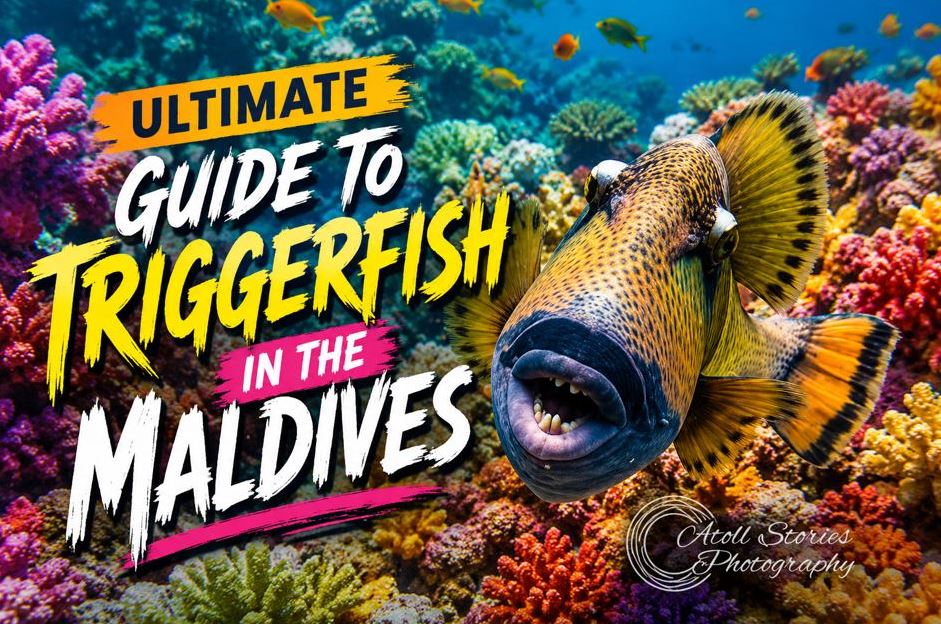
The Ultimate Guide to Triggerfish in the Maldives: Species, Safety, and Snorkeling Tips
When you picture diving or snorkeling in the Maldives, your mind likely drifts to graceful manta rays, gentle whale sharks, and vibrant coral gardens. But if you talk to seasoned local dive guides, they will often tell you about a different reef resident that packs a massive personality (and sometimes a bit of attitude): the Triggerfish.
Belonging to the family Balistidae, triggerfish are famous for their oval bodies, striking colors, and incredibly intelligent behavior. The Maldives is home to at least 10 distinct species of triggerfish.
Whether you are planning a luxury resort stay, a liveaboard dive trip, or a flats-fishing adventure, this comprehensive guide will teach you everything you need to know about the triggerfish of the Maldives.
Why Are They Called “Triggerfish”?
Before diving into the specific species, it helps to understand their unique anatomy. Triggerfish get their name from a specialized lock-and-key defense mechanism on their dorsal fins:
- The First Spine: A large, sharp spine that the fish can erect when threatened.
- The Second Spine: A smaller “trigger” spine that locks the main spine firmly into place.
When a predator attacks, or when the fish wants to sleep securely at night, it wedges itself into a tight coral crevice and deploys this trigger. Once locked, it is virtually impossible for a predator to pull them out. To lower the main spine, the secondary “trigger” must be depressed.
5 Common Triggerfish Species You’ll See in the Maldives
While exploring the thriving house reefs of the Maldivian atolls, keep an eye out for these five spectacular species:
1. The Picasso Triggerfish (Rhinecanthus aculeatus)
True to its name, the Picasso Triggerfish looks like a living abstract painting. Found in shallow lagoons and sandy flats, it features a dazzling mix of turquoise, yellow, black, and white geometric lines. They are relatively small (up to 30 cm) and tend to be quite shy around humans.
2. The Clown Triggerfish (Balistoides conspicillum)
Perhaps the most visually stunning of the family, the Clown Triggerfish is a favorite for underwater photographers. It boasts a dramatic black body covered with large, white leopard-like spots on its belly and a bright yellow-orange mouth. They prefer deeper reef drop-offs.
3. The Red-Toothed Triggerfish (Odonus niger)
Don’t let the name scare you—these fish are generally harmless plankton-eaters. They sport deep navy, turquoise, or midnight-blue bodies with long, elegant lunate tails. Their most distinctive feature is a pair of tiny, bright crimson teeth that are visible even when their mouths are closed. They are often seen in massive, shimmering schools along reef walls.
4. The Yellowmargin Triggerfish (Pseudobalistes flavimarginatus)
Often spotted by fly fishermen on shallow flats, these fish have a yellowish-gray body outlined by beautiful golden-orange margins on their fins. They are highly perceptive and incredibly challenging to approach.
5. The Titan Triggerfish (Balistoides viridescens)
The “heavyweight champion” of the reef, the Titan (or Giant) Triggerfish can grow up to 75 cm (30 inches) long. With a heavy, yellowish-green body, scale-patterned markings, and exceptionally strong jaws, this is the species that has earned triggerfish their feisty reputation.
| Species | Average Size | Distinctive Feature | Habitat |
| Picasso | 25–30 cm | Geometric blue, yellow, & white lines | Shallow lagoons, sandy flats |
| Clown | 35–50 cm | Large white belly spots, yellow mouth | Reef slopes, drop-offs |
| Red-Toothed | 30–40 cm | Midnight blue body, visible red teeth | Open water near reef edges |
| Yellowmargin | 50–60 cm | Golden-orange trimmed fins | Shallow flats, estuaries |
| Titan | Up to 75 cm | Giant size, heavy jaw, yellow/green | Coral reefs down to 50m |
The Titan Triggerfish: Understanding Their Behavior
The Titan Triggerfish is famous among scuba divers for its fiercely territorial nature, particularly during nesting season (which usually peaks around new and full moons).
Female Titans dig deep, crater-like nests in the sand to lay their eggs. While guarding her future offspring, a female Titan becomes incredibly defensive.
Signs of an Aggressive Triggerfish:
If you get too close to a nest, a Titan will give you clear warning signs before charging:
- The “Trigger” Goes Up: They will erect their first dorsal spine.
- The Side-Eye: They will roll onto their side, giving you a clear stare with eyes that rotate independently.
- Fluttering Fins: Rapid flaring of their fins and sudden, quick movements toward you.
Crucial Safety Tip: A Titan Triggerfish defends a cone-shaped territory that extends from their nest straight up to the surface. If a Titan charges you, do not swim upward. Swimming to the surface keeps you inside their zone. Instead, swim horizontally away from the nest. Use your swim fins as a shield between you and the fish while you make your escape.
Fly Fishing for Triggerfish on the Maldivian Flats
Beyond diving, the Maldives has become a world-class destination for saltwater fly fishing, with both Titan and Yellowmargin triggerfish serving as prized targets.
Fishing for them on shallow sand flats is a game of ultimate stealth. Triggers are notoriously nervous; the slight “plop” of a heavy fly or lure landing too close will send them streaking into deep water. Anglers typically use 9wt to 10wt rods, weighted crab or shrimp patterns (like the Alphlexo Crab), and heavy fluorocarbon leaders to survive the fish’s crushingly strong, coral-snapping teeth.
Best Places to See Triggerfish in the Maldives
Triggerfish are highly abundant across the archipelago, but a few hotspots offer incredible encounters:
- Ari Atoll (Maaya Thila): Famous for vibrant marine life, this marine protected area is an excellent place to watch Titan Triggerfish patrolling the reef slopes.
- Kuramathi House Reef: Known for high biodiversity, where lucky snorkelers can spot rarer variations like the Boomerang and Wedge-tail triggerfish.
- Thaa Atoll & Shallow Atolls: Perfect for those looking to sight-fish or view triggerfish tailing in knee-deep flats.
Final Thoughts for Your Trip
Despite their fierce reputation, triggerfish are an essential and fascinating part of the Maldivian coral ecosystem. Outside of nesting season, they are generally indifferent to humans or actively shy. By respecting their space, watching for behavioral cues, and swimming horizontally if they get protective, you can safely enjoy one of the most charismatic, colorful fish the Indian Ocean has to offer!