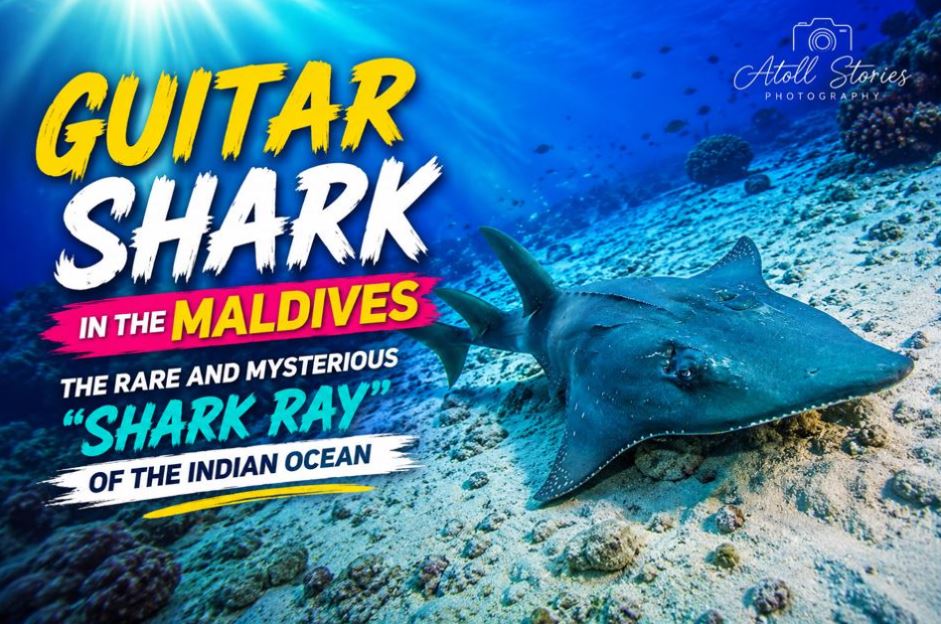
Guitar Shark in the Maldives: The Rare and Mysterious “Shark Ray” of the Indian Ocean
The Maldives is world-famous for its crystal-clear lagoons, thriving coral reefs, and unforgettable marine life. While divers often come searching for manta rays and whale sharks, another fascinating creature quietly glides across Maldivian sandy bottoms — the Guitar Shark. Often called a “shark ray” because of its unusual appearance, this rare animal combines features of both sharks and rays, making it one of the ocean’s most unique species.
What Is a Guitar Shark?
The Guitar Shark belongs to a group of fish known as guitarfish, which are closely related to rays. Their bodies look like a mix between a shark and a stingray. They have flattened heads and broad pectoral fins like rays, but long shark-like tails and dorsal fins.
In the Maldives, guitar sharks are occasionally spotted in shallow lagoons, sandy channels, reef flats, and coastal areas. Their calm behavior and unusual shape make them an exciting sight for underwater photographers and marine enthusiasts.
Why Is It Called a Guitar Shark?
The name “guitar shark” comes from the animal’s body shape, which resembles a guitar when viewed from above. Its broad front body tapers into a long narrow tail, creating a silhouette similar to a musical instrument.
These creatures are sometimes referred to as:
- Guitarfish
- Shark rays
- Bowmouth guitarfish
- Ray sharks
Although they may look intimidating, guitar sharks are generally harmless to humans.
Appearance and Characteristics
Guitar sharks are easily recognizable because of their unique body structure. Key features include:
- Flattened body with shark-like tail
- Wide triangular head
- Strong pectoral fins
- Small eyes positioned on top of the head
- Sandy brown or spotted coloration for camouflage
Some species found in the Indian Ocean can grow over 3 meters long, making them impressive animals to encounter underwater.
Where to Find Guitar Sharks in the Maldives
Guitar sharks are not as common as reef sharks, but lucky divers and snorkelers may encounter them in several parts of the Maldives.
Popular Areas for Sightings
- South Ari Atoll
- Baa Atoll
- Fuvahmulah
- Addu Atoll
- Shallow lagoon systems around local islands
They are most often seen resting on sandy seabeds near coral reefs.
Best Time to See Guitar Sharks
The Maldives offers year-round diving, but calmer seas and better underwater visibility increase the chances of spotting guitar sharks.
Ideal Seasons
- January to April: Excellent visibility and calm waters
- May to November: Increased marine activity during plankton-rich monsoon months
Early morning dives near sandy reef channels can provide the best opportunities.
Behavior and Feeding Habits
Guitar sharks are bottom-dwelling predators. They spend much of their time resting partially buried in sand, waiting for prey to pass by.
Diet Includes
- Small fish
- Crustaceans
- Shrimp
- Crabs
- Mollusks
Using their strong jaws, they crush hard-shelled prey found along reef bottoms.
Despite their size, guitar sharks are shy and usually swim away when approached carefully.
Diving with Guitar Sharks in the Maldives
Encountering a guitar shark underwater is a memorable experience. Because they are less common than many other marine species, sightings feel especially rewarding.
Tips for Responsible Encounters
- Maintain a respectful distance
- Avoid touching or chasing the animal
- Use slow movements underwater
- Never block its escape route
- Avoid flash photography at close range
Responsible marine tourism helps protect these vulnerable species.
Are Guitar Sharks Dangerous?
Guitar sharks are considered harmless to humans. They are non-aggressive animals that prefer to avoid confrontation. Like most marine creatures, they may defend themselves if threatened or handled, but attacks on humans are extremely rare.
Conservation Status
Many species of guitar sharks and guitarfish are now threatened due to overfishing, habitat destruction, and accidental capture in fishing nets.
The Maldives plays an important role in marine conservation by protecting shark populations and promoting sustainable tourism practices. Divers and travelers can support conservation by choosing eco-friendly dive operators and respecting marine life.
Photography Tips for Capturing Guitar Sharks
Photographing guitar sharks can produce incredible underwater images because of their unusual shape and camouflage patterns.
Best Photography Tips
- Use natural light in shallow lagoons
- Approach slowly from the side
- Focus on the head and body shape
- Capture wide-angle shots with surrounding reef scenery
- Be patient and avoid disturbing resting individuals
Underwater photographers in the Maldives often consider guitar sharks a rare and rewarding subject.
Why Guitar Sharks Make the Maldives Special
The Maldives is one of the best places in the world to experience extraordinary marine biodiversity. While manta rays and whale sharks steal much of the spotlight, guitar sharks represent the hidden wonders of Maldivian reefs.
Their prehistoric appearance, graceful movement, and rarity create unforgettable encounters for divers and snorkelers alike.
Final Thoughts
The Guitar Shark in the Maldives is one of the ocean’s most mysterious and captivating creatures. With its unusual shark-ray appearance and calm behavior, it offers a unique experience for anyone exploring Maldivian waters.
Whether you are a scuba diver, snorkeler, underwater photographer, or marine life enthusiast, spotting a guitar shark is a truly special moment that highlights the incredible biodiversity of the Maldives.