Napoleon Wrasse in the Maldives: The Gentle Giant of Coral Reefs
The Maldives is world-famous for its crystal-clear lagoons, colorful coral reefs, and extraordinary marine life. Among the most fascinating reef inhabitants is the majestic Napoleon Wrasse, also known as the Humphead Wrasse. With its giant size, vibrant colors, and friendly personality, this iconic reef fish is one of the most unforgettable underwater encounters for divers and snorkelers visiting the Maldives.
What Is a Napoleon Wrasse?
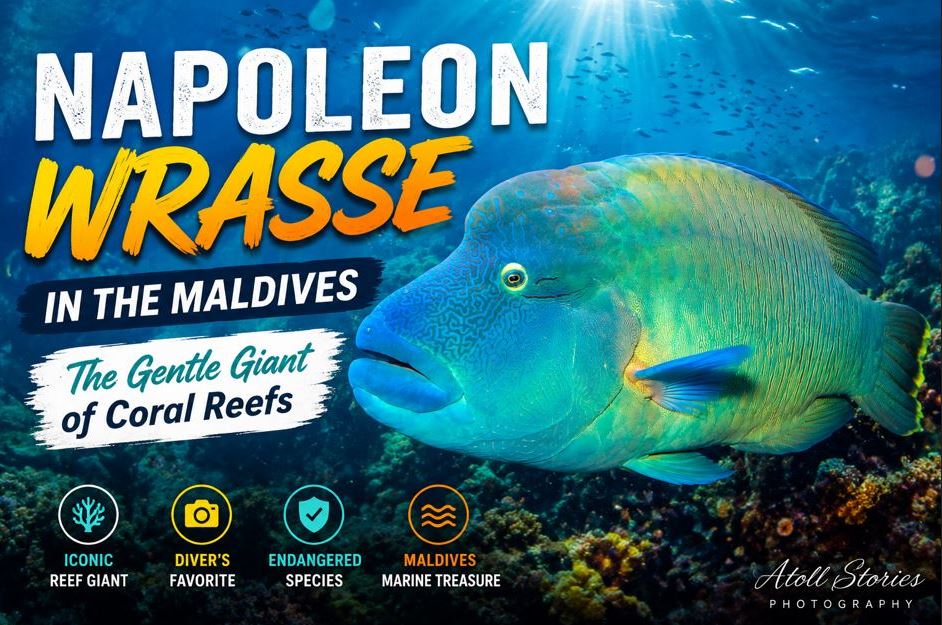
The Napoleon Wrasse is one of the largest reef fish species in the world. Recognizable by the large hump on its forehead and thick lips, this impressive fish can grow over 2 meters long and weigh more than 180 kilograms.
The species is scientifically known as Cheilinus undulatus and belongs to the wrasse family. Adult males usually display brilliant shades of blue, green, and turquoise, while juveniles have lighter green or yellow tones with beautiful patterns.
Because of their intelligence and curious behavior, Napoleon Wrasses often approach divers calmly, making them a favorite subject for underwater photographers in the Maldives.
Why Is It Called “Napoleon” Wrasse?
The fish gets its name from the hump on its forehead, which resembles the hat worn by the French military leader Napoleon Bonaparte. In some regions, it is also called the “Humphead Wrasse.”
Its unique appearance, combined with its graceful swimming style, makes it one of the most recognizable fish in tropical oceans.
Where to See Napoleon Wrasse in the Maldives
The Maldives offers excellent opportunities to encounter Napoleon Wrasses in healthy coral reef ecosystems. They are commonly found near:
- Coral reef slopes
- Channels and passes
- Drop-offs
- Protected marine areas
- House reefs around resorts
Some of the best atolls for spotting Napoleon Wrasse include:
Ari Atoll
Known for vibrant coral reefs and rich marine biodiversity.
Baa Atoll
A UNESCO Biosphere Reserve with thriving reef ecosystems.
North Male Atoll
Popular dive sites where large reef fish are commonly seen.
Fuvahmulah
Famous for pelagic encounters and diverse marine life.
Habitat and Behavior
Napoleon Wrasses prefer warm tropical waters with healthy coral reefs. In the Maldives, they are often spotted cruising slowly along reef edges or feeding around coral formations.
These fish are known for their intelligence and curiosity. Many divers report that Napoleon Wrasses seem comfortable around humans and may even follow divers during underwater excursions.
Unlike aggressive predators, they are generally peaceful and harmless to humans.
What Do Napoleon Wrasses Eat?
Napoleon Wrasses are carnivorous and feed on a variety of reef animals, including:
- Mollusks
- Crustaceans
- Sea urchins
- Starfish
- Small fish
One remarkable fact is that they can eat toxic prey such as crown-of-thorns starfish, which damage coral reefs. This makes them important for maintaining reef health in the Maldives.
Diving with Napoleon Wrasse in the Maldives
Encountering a Napoleon Wrasse underwater is a magical experience. Divers often describe them as gentle giants because of their calm nature and slow movements.
Best Tips for Divers
- Move slowly and calmly
- Avoid chasing the fish
- Maintain respectful distance
- Use wide-angle lenses for photography
- Avoid touching or feeding marine life
Early morning dives often provide the best chances for sightings.
Conservation Status
The Napoleon Wrasse is classified as an endangered species due to overfishing and habitat destruction in parts of the Indo-Pacific region.
The Maldives has become an important refuge for marine life thanks to conservation efforts and marine protected areas. Sustainable tourism and responsible diving practices help protect these magnificent reef fish for future generations.
Interesting Facts About Napoleon Wrasse
- They can live for more than 30 years
- Juveniles are usually female and may change sex later in life
- They are among the largest coral reef fish in the world
- Their lips become thicker with age
- Each fish has unique facial markings similar to fingerprints
Best Time to Spot Napoleon Wrasse in the Maldives
Napoleon Wrasses can be seen year-round in the Maldives. However, visibility is usually best during the dry season from November to April, when calm seas and clear water create ideal diving conditions.
Underwater Photography Tips
Photographing Napoleon Wrasse can produce stunning images because of their vibrant colors and large size.
Recommended Photography Tips
- Use natural sunlight whenever possible
- Shoot slightly upward for dramatic compositions
- Include coral backgrounds for scale
- Use slow movements to avoid scaring the fish
- Capture eye contact moments for emotional impact
Final Thoughts
The Napoleon Wrasse is one of the Maldives’ most iconic reef fish species. Its massive size, beautiful colors, and gentle behavior make it a dream encounter for divers, snorkelers, and underwater photographers alike.
Whether you are exploring coral gardens in Ari Atoll or diving deep channels in North Male Atoll, spotting a Napoleon Wrasse is an unforgettable experience that showcases the incredible biodiversity of the Maldives.
For ocean lovers visiting the Maldives, meeting this gentle reef giant is truly a once-in-a-lifetime underwater adventure.