Ultimate North Male Atoll Diving Guide: Complete Scuba Diving & Liveaboard Resource
North Malé Atoll, also known as North Kaafu Atoll, is the legendary birthplace of tourism in the Maldives. It remains the crown jewel of the archipelago’s scuba diving scene. Located just a brief speedboat ride from Velana International Airport (MLE) and the capital city of Malé, this atoll offers unparalleled geographic convenience without compromising underwater quality.
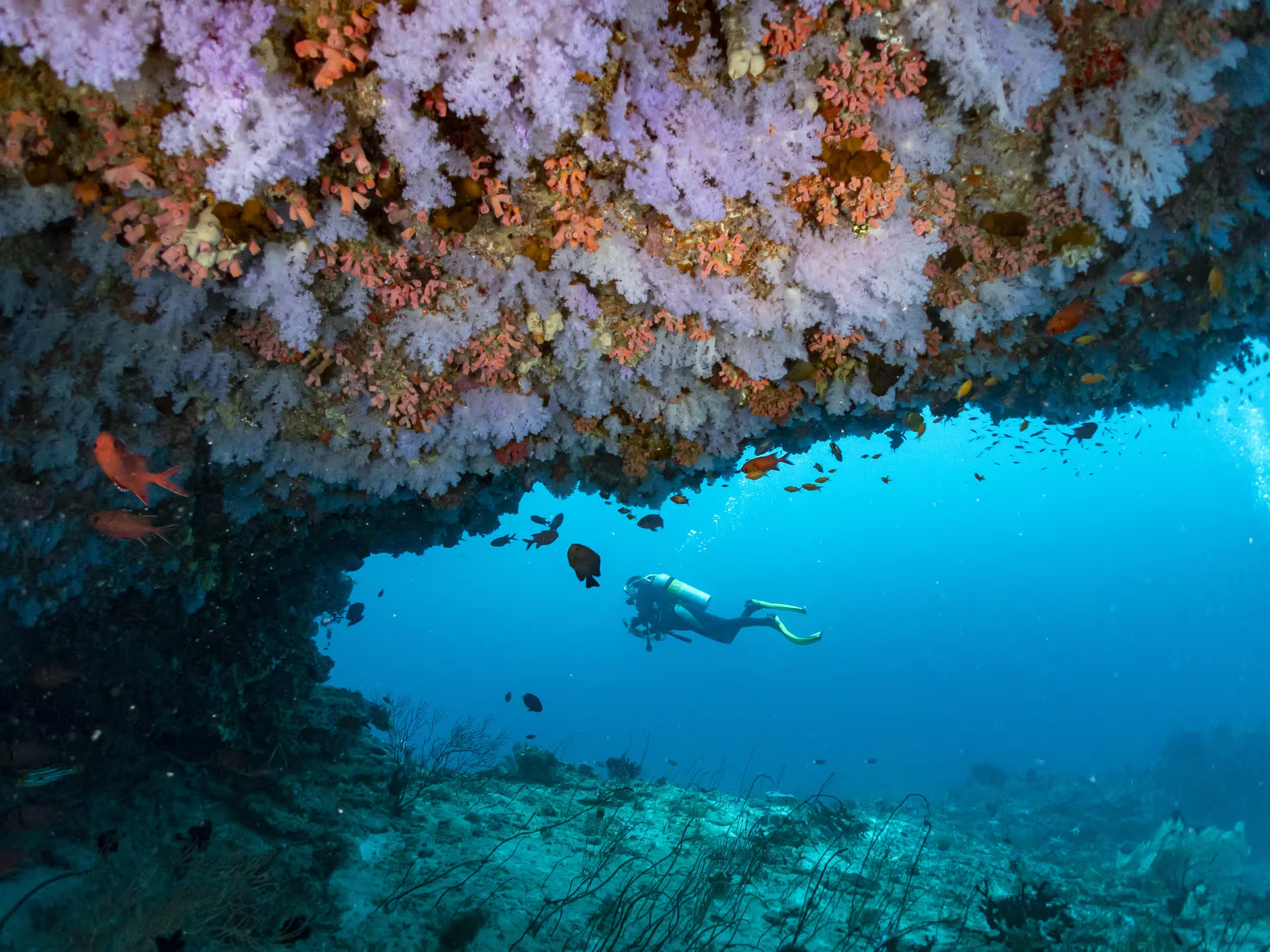
Boasting over 50 world-class dive sites, North Male Atoll caters to every skillset—from novices navigating shallow house reefs to veteran divers tackling high-energy channel drifts. The underwater topography features incredibly healthy marine ecosystems, vibrant soft and hard corals, mysterious caves, and submerged thilas (pinnacles) that drop off into the deep blue.
Whether your goal is to lock eyes with a schooling wall of grey reef sharks, watch majestic manta rays dance at a cleaning station, or explore historical shipwrecks, this comprehensive guide covers everything you need to plan your ultimate Maldivian diving adventure.
Best Time to Dive North Male Atoll: Monsoon Seasons & Marine Life Calendar
Diving in North Male Atoll is exceptional year-round. However, the underwater environment shifts dramatically between two distinct monsoon seasons. Selecting the right time to visit depends entirely on your visibility preferences and marine life bucket list.
| Season | Months | Weather | Diving Conditions | Marine Life Highlights |
| Northeast Monsoon (Dry Season) | December – April | Calm seas, light winds, up to 10 hours of sunshine daily. | Visibility exceeds 30 meters, gentle currents, ideal for wide-angle underwater photography. | Reef sharks, eagle rays, hawksbill turtles, massive schools of fusiliers; mantas at western cleaning stations (e.g., Bodu Hithi). |
| Southwest Monsoon (Wet Season) | May – November | Higher chance of rain, stronger winds (20–30 km/h), choppier surface conditions. | Visibility drops to 10–20 meters due to plankton-rich waters; stronger currents. | Peak manta ray and whale shark season; nutrient-dense channels attract dense congregations of large pelagics. |
Quick Summary: For flat seas, endless visibility, and postcard-perfect weather, book your trip between December and April. For the absolute highest statistical probability of encountering mass aggregations of manta rays and whale sharks, brave the plankton blooms between June and November.
The Northeast Monsoon (December – April)
During these dry months, oceanic currents push from the northeast, clearing out the eastern sides of the atolls and delivering crystal-clear water. Dive sites on the eastern edge enjoy stunning visibility. Manta rays shift to western cleaning stations like Bodu Hithi Manta Point to feed on the plankton pushed out of the atoll lagoons. This is the peak high season for both luxury resorts and liveaboard departures.
The Southwest Monsoon (May – November)
As the wind flips, nutrient-rich upwellings trigger massive plankton blooms. While this reduces horizontal visibility, it creates a feeding wonderland for filter feeders. From May onward, Lankan Manta Point on the eastern side becomes a global hotspot for manta activity, peaking from June to September. Whale shark sightings also climb along the western channels during this phase.
Top Dive Sites in North Male Atoll: Thilas, Wrecks & Manta Points
🐠 Classic Thila Dives (Submerged Reefs)
A thila is a submerged coral pinnacle that rises from the atoll floor, acting as an oasis for marine biodiversity.
                       [ Shallow Reef Top: 3-8m ] (Anemones, Anthias)
                                /       \
      [ Mid-Reef Walls: 15m ]  /         \  [ Caves & Overhangs: 18-30m ]
                              /           \  (Soft Corals, Gorgonians)
                             /_____________\
                         [ Atoll Sandy Floor: 35m+ ]
- Banana Reef (Depth: 3m – 30m | Skill Level: Beginner to Advanced): The Maldives’ pioneer dive site. Shaped like a crescent banana, it features a dramatic central overhang, deep walls, and vibrant soft coral. It is famous for swirling schools of blue-lined snappers, oriental sweetlips, and resident sea turtles. Be wary of unpredictable washing-machine currents near the point.
- Nasimo Thila / Nassimo Thila (Depth: 18m – 30m | Skill Level: Intermediate): A spectacular dive highlighted by massive detached coral boulders resting on the sea floor. The ceilings of these deep overhangs are blanketed in neon-blue soft corals. Look for hunting bluefin trevallies, giant moray eels, and sleeping nurse sharks in the caves.
- Okobe Thila (Depth: 10m – 28m | Skill Level: Beginner to Intermediate): Composed of three distinct coral formations separated by a narrow, deep canyon. This site is highly protected from weather, allowing pristine hard coral growth. It features a constant parade of barracuda, large tuna, and Napoleon wrasse.
- Kuda Haa Thila (Depth: 8m – 15m | Skill Level: Beginner): Universally nicknamed “fish soup.” This dramatic twin-peaked thila is completely obscured by millions of glassfish, anthias, and fusiliers. The reef top is layered with vibrant anemone carpets hosting aggressive clownfish.
+----------------+------------+--------------+---------------------------------------+
| Dive Site      | Depth (m)  | Skill Level  | Key Marine Highlight                  |
+----------------+------------+--------------+---------------------------------------+
| Banana Reef    | 3 – 30     | All Levels   | Snapper schools & massive overhangs   |
| Nasimo Thila   | 18 – 30    | Intermediate | Blue soft corals & deep swim-throughs |
| Okobe Thila    | 10 – 28    | Intermediate | Schooling pelagics & pristine corals  |
| Kuda Haa Thila | 8 – 15     | Beginner     | Hyper-dense marine "fish soup"        |
| Sunlite Thila  | 3 – 30     | Beginner     | Buoyancy practice & seasonal mantas   |
+----------------+------------+--------------+---------------------------------------+
🦈 Drift Dives & Current Sites
- Lion’s Head (Depth: 3m – 45m | Skill Level: Intermediate to Advanced): A strictly protected marine reserve situated south of Thila Fushi reef. Named after a distinct coral overhang that resembles a male lion, this deep vertical wall drops off into the abyss. Strong currents make it an exhilarating drift dive where grey reef sharks, silver-tip sharks, and eagle rays consistently cruise the blue water.
- Rasfari (Depth: 15m – 40m | Skill Level: Advanced): A massive outer reef slope that acts as a natural highway for pelagic life. Divers hook into the reef edge to watch grey reef sharks patrol the deep, while large schools of eagle rays glide gracefully overhead against intense incoming currents.
🐋 Manta Ray & Pelagic Sites
- Lankan Manta Point / Lankan Finolhu Faru (Depth: 10m – 40m | Skill Level: Beginner to Intermediate): During the Southwest Monsoon, this site becomes an absolute theater. Massive Porites coral heads at 15 meters serve as cleaning stations where manta rays queue up to let cleaner wrasses pick parasites from their wings. Divers sit quietly on the sandy perimeter to witness this incredible symbiotic behavior.
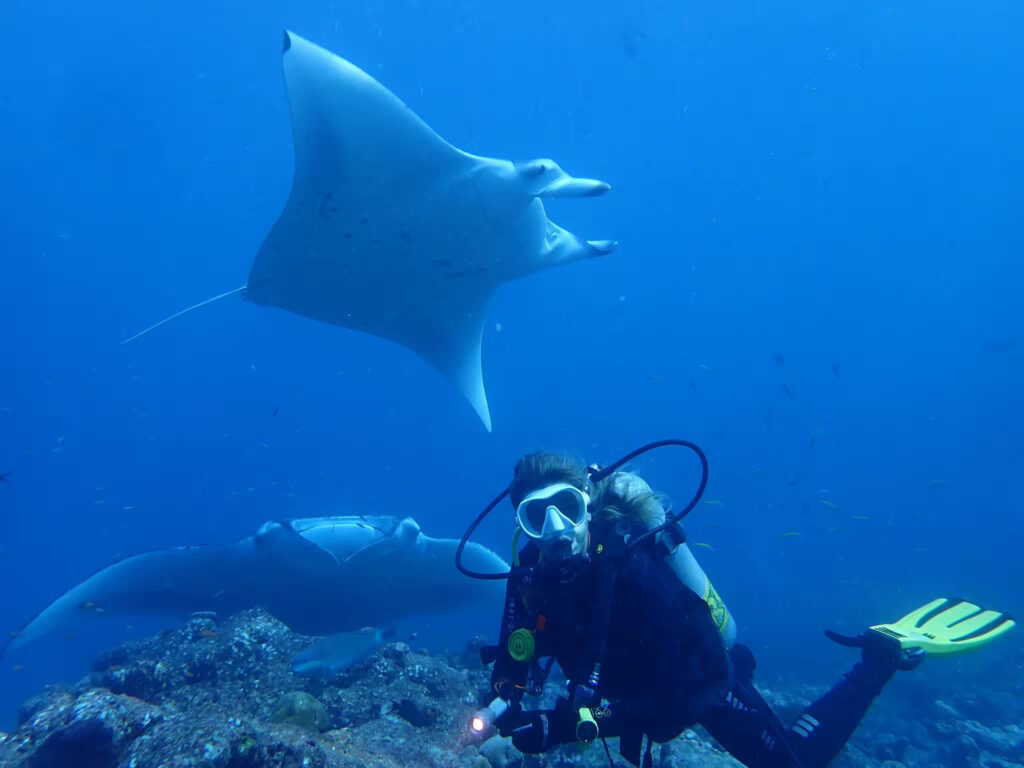
- Bodu Hithi Manta Point (Depth: 20m – 30m | Skill Level: Intermediate): The prime alternative location during the Northeast Monsoon. Situated on the western rim of the atoll, this site offers reliable manta action along shallow cleaning stations, accompanied by reef sharks and giant Napoleon wrasses.
🚢 Historical Wreck Dives
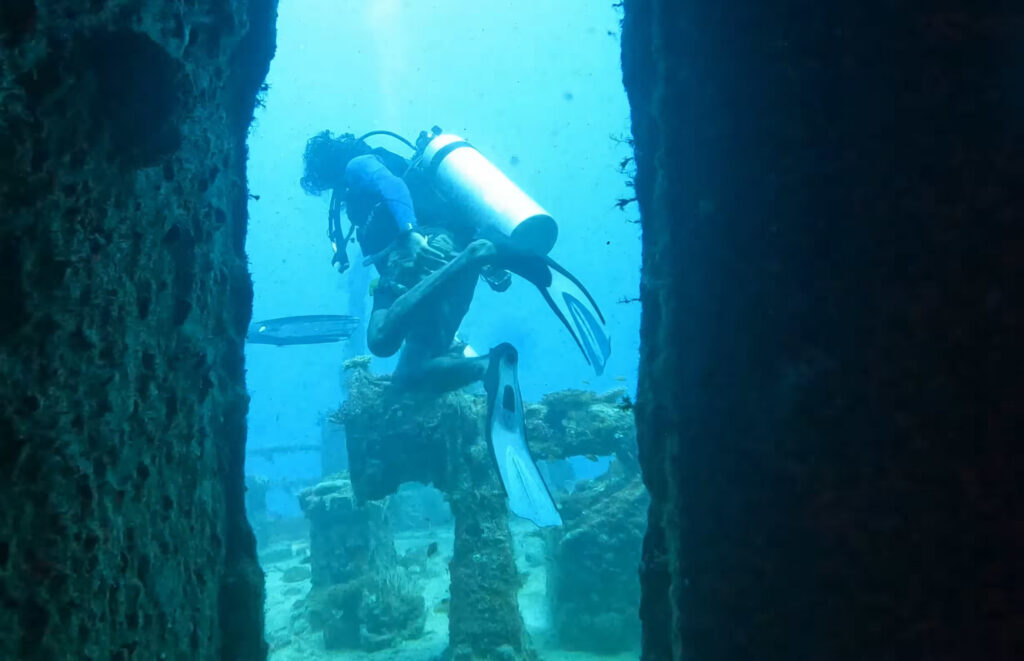
- MV Maldives Victory Wreck (Depth: 12m – 35m | Skill Level: Intermediate to Advanced): An 83-meter-long cargo ship that ran aground and sank on Friday, February 13th, 1981. It sits perfectly upright on a sandy bottom at 35 meters, parallel to the airport runway reef.The mast towers up to 12 meters, making it highly accessible. The structure has transformed into a thriving artificial reef, wrapped in orange sponges and soft corals. Advanced divers can penetrate the open cargo holds to spot giant trevallies, batfish, lionfish, and resting marble rays. Strong currents frequently sweep across the wreck, requiring a quick negative entry down the line.
Diving with Mantas and Whale Sharks: Pro Tips
North Male Atoll offers incredibly dependable manta ray encounters across two distinct seasons, ensuring you can see these majestic creatures nearly any time of year if you choose the right side of the atoll.
       NORTHEAST MONSOON (Dec-Apr)           SOUTHWEST MONSOON (May-Nov)
     ===============================       ===============================
      [ Western Sites Peak Action ]         [ Eastern Sites Peak Action ]
       -> Bodu Hithi Manta Point            -> Lankan Manta Point
       -> Western Channels                  -> Sunlite Thila
Essential Manta Etiquette for Scuba Divers
To ensure the mantas feel safe enough to stay at the cleaning stations, divers must follow strict interaction protocols:
- Master Your Buoyancy: Stay low to the seabed or sandy bottom. Never hover directly over the top of a cleaning station block, as this scares away the mantas.
- Maintain Your Distance: Let the mantas initiate the interaction. They are naturally curious and will often glide inches over your head if you remain completely still.
- Never Chase or Touch: Chasing a manta will cause it to instantly flee the site, ruining the dive for everyone. Touching them removes the protective slime layer on their skin, making them vulnerable to infections.
While whale sharks are more commonly resident in South Ari Atoll, they frequently visit North Male’s deep outer channels between June and November. For an ultimate megafauna double-header, select a liveaboard itinerary that ventures north from Male toward Baa Atoll’s Hanifaru Bay (a protected UNESCO Biosphere Reserve) where seasonal plankton traps create massive feeding frenzies of whale sharks and mantas simultaneously.
North Male Atoll Liveaboards: Itineraries & Booking Tips
Liveaboards (safari boats) are highly recommended for experiencing the best of the Maldives. They eliminate the transit limitations of a single island resort, allowing you to dive up to four times a day and travel between multiple atolls.
Popular 2026 Liveaboard Choices
- Luxury Cruising: Scubaspa Yang & Scubaspa Ying (Unique hybrid spa and dive vessels), Ocean Divine, Blue Force One.
- Premium Diving Vessels: Emperor Serenity, Maldives Aggressor II, Carpe Novo, Blue Voyager.
Typical Liveaboard Routing Options
- 7-Night Central Atolls Loop: The classic route. Covers North Male, South Male, Ari Atoll, and Vaavu Atoll. Perfect for first-time visitors seeking sharks, mantas, and wrecks.
- 10-to-12-Night Northern Expeditions: Typically runs from North Male up through Baa, Raa, Lhaviyani, and Noonu Atolls. Optimized for pristine reefs and macro diving.
Booking Insider Tip: The vast majority of confirmed liveaboard departures operate during the high dry season from November to May. If you are looking to book a safari boat between June and October, options are limited. Secure your cabin at least 6 to 9 months in advance. Ensure your package includes Nitrox, which is highly advantageous for extending your bottom times on deep thila and wreck dives.
Where to Stay: Luxury Resorts vs. Budget Local Islands
North Male Atoll is highly unique because it caters seamlessly to both ultra-luxury travelers and budget backpackers across its 50+ islands.
🏨 Recommended Dive Resorts (Resort Island Diving)
Staying at a private island resort offers maximum comfort, premium dive boats (dhonis), and house reefs step from your villa.
- Dhawa Ihuru: Features one of the finest, most vibrant house reefs in the entire Maldives, complete with its own accessible shipwreck, the Ranamaari.
- Bandos Maldives: Home to Dive Bandos, one of the longest-running and most trusted PADI 5-Star Instructor Development Centers (IDCs) in the country. Excellent medical safety with an onsite decompression chamber.
- Kagi Maldives: A premium boutique wellness resort partnered with Euro-Divers, offering highly customized, small-group dive itineraries.
- Coco Bodu Hithi: Strategically situated right next to Bodu Hithi Manta Point, drastically cutting down daily travel times during the manta season.
🏡 Budget Local Island Options (Guesthouse Diving)
Since the Maldives legalized local island tourism, budget-conscious divers can stay at local guesthouses for a fraction of the cost.
- Himmafushi, Diffushi, and Huraa: These populated local islands feature fantastic boutique guesthouses priced between $50–$120 per night. Local dive centers offer highly competitive boat diving packages ($40–$60 per dive).
- Note: Alcohol is strictly prohibited on local islands due to local regulations. If an evening cocktail is a non-negotiable part of your vacation, choose a private island resort instead.
Certification Levels & Diving Logistics
Matching Sites to Your Experience Level
The Maldives is notorious for powerful, shifting tidal currents. Choosing the right sites for your certification tier is paramount to safety.
[ Open Water / 18m Max ]      -> Sunlite Thila, Kuda Haa, Shallow House Reefs
[ Advanced OW / 30m Max ]     -> Banana Reef, Nasimo Thila, Lankan Manta Point
[ Deep / Wreck Specialties ]  -> MV Maldives Victory Wreck, Deep Channel Drifts
- Open Water Divers: Stick to protected thilas, shallow sandy manta points, and house reefs. Sites like Sunlite Thila offer ideal current-free conditions for dialing in buoyancy.
- Advanced Open Water Divers: Required for the majority of top-tier sites. You must be comfortable with negative entries (purging all air from your BCD and dropping straight down to the reef to avoid being swept away by surface currents) and using a surface marker buoy (SMB).
Getting to Your Destination from Malé Airport
- Resort Speedboats: If staying at a North Male resort, an airport representative will meet you at the arrivals hall and escort you directly to a private speedboat. Transits take anywhere from 15 to 60 minutes.
- Public Ferries & RTL Network: For local islands, the cheap government ferry system or the Raajje Transport Link (RTL) speedboats offer economical transfers ($2–$10). However, public options have limited timetables and generally do not operate on Fridays.
Practical Checklist for Divers Heading to North Male Atoll
- Pack Reef-Safe Sunscreen: Chemical sunscreens containing oxybenzone are harmful to delicate coral ecosystems. It is highly recommended to use mineral-based, reef-safe products.
- Bring a Dedicated Dive Computer: Due to multi-level profiles on deep pinnacles and wrecks, a dive computer is mandatory for tracking your own nitrogen loading.
- Secure Scuba Travel Insurance: Ensure you hold a specialized policy (such as DiveAssure or DAN) that fully covers hyperbaric chamber treatments and emergency medical evacuations.
- Respect the Legal Depth Limits: The maximum legal recreational diving limit in the Maldives is strictly 30 meters ($100\text{ feet}$), regardless of your certification level or gas blend (unless holding an active technical diving certification on a planned tech profile).