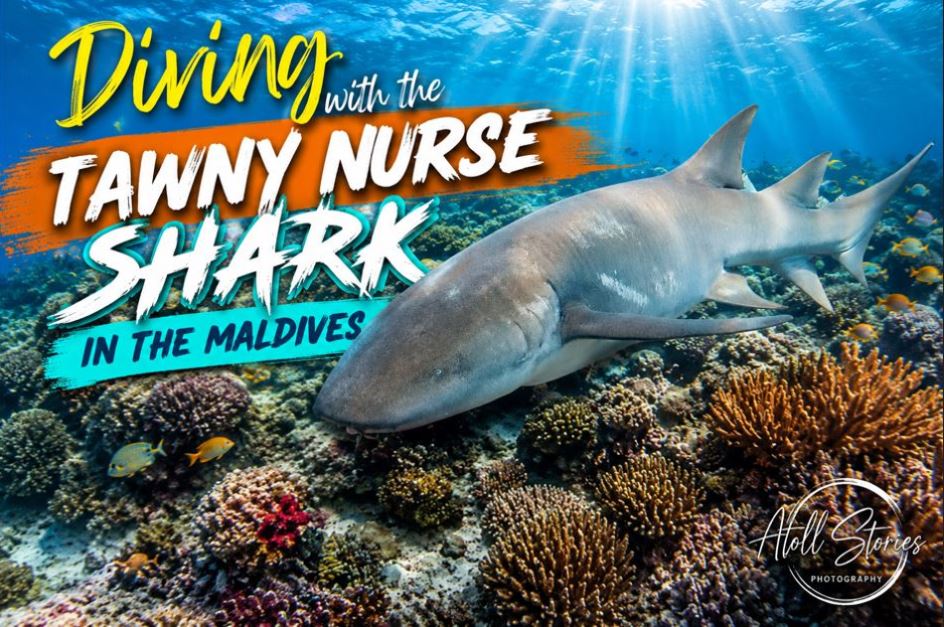
Diving with the Tawny Nurse Shark in the Maldives: The Ultimate Guide
For travelers drawn to the raw beauty of the Indian Ocean, few experiences match the quiet power of sharing the water with a shark. While apex predators like tiger sharks or hammerheads dominate reef mythology, there is one resident that offers an entirely different, grounded kind of magic: the tawny nurse shark (Nebrius ferrugineus).
Known locally in Dhivehi as the nidhan miyaru—the “sleeping shark”—the tawny nurse shark in the Maldives is a favorite for scuba divers and snorkelers alike. If you are planning an unforgettable marine adventure, here is everything you need to know about encountering these gentle, nocturnal beauties in their natural habitat.
What Makes the Tawny Nurse Shark Unique?
While often confused with its Atlantic cousin (Ginglymostoma cirratum), the Indo-Pacific’s tawny nurse shark is a distinct and fascinating carpet shark species.
1. Evolutionary Stillness (Buccal Pumping)
Unlike many pelagic shark species that must constantly swim to force water over their gills, the tawny nurse shark is a master of stillness. They utilize buccal pumping—actively drawing water into their mouths and pumping it across their gills. This allows them to park themselves on the ocean floor for hours at a time.
2. The Living Vacuum
Tawny nurse sharks are highly specialized nocturnal suction feeders. They use their small mouths and massive pharyngeal cavities to create a sudden, powerful negative pressure vacuum, literally inhaling octopuses, crabs, and small reef fish out of deep coral crevices.
3. Social “Piling” Behavior
Tawny nurse sharks have highly localized home ranges and frequently return to the exact same underwater caves or ledges every day. Remarkably social, it is common to find two dozen or more individuals stacked directly on top of each other like giant, tan logs resting through the day.
+-------------------+---------------------------------------------------+
| Feature           | Tawny Nurse Shark (Nebrius ferrugineus) Quick Facts|
+-------------------+---------------------------------------------------+
| Max Length        | Up to 3.2 meters (10.5 feet)                      |
| Coloration        | Shifting shades of gray-brown to tan              |
| Main Diet         | Octopus, crustaceans, sea urchins, small reef fish|
| Fun Fact          | Can change color tones slightly to match habitat  |
+-------------------+---------------------------------------------------+
Where to See Nurse Sharks in the Maldives
While tawny nurse sharks can be spotted cruising shallow lagoons and house reefs across the Maldives, a few world-renowned hotspots offer guaranteed encounters.
Alimatha Jetty (Vaavu Atoll)
This is the undisputed capital of nurse shark diving in the Maldives. Originally drawn to the area by resort kitchen scraps decades ago, massive aggregations of tawny nurse sharks now gather here every single night. Divers can sit on a shallow sandy bottom at 15 meters while dozens of massive sharks glide effortlessly over their heads and shoulders.
South Ari Atoll
Known primarily for whale sharks, the deep channels and sheltered outer reefs of South Ari Atoll are also home to a thriving population of tawny nurse sharks resting under coral ledges during the day.
Raa & Baa Atolls
Resorts like InterContinental Maldives Maamunagau in the northern atolls feature shallow, tranquil lagoons where family-friendly nurse shark snorkeling takes place in perfectly calm conditions.
What to Expect: Snorkeling vs. Scuba Diving
Nurse Shark Snorkeling
Because tawny nurse sharks frequently hang out in shallow lagoons and near reef flats (at depths of 5 to 30 meters), you do not need a scuba certification to enjoy them. Nurse shark snorkeling in the Maldives allows you to float effortlessly at the surface while the sharks move naturally through the clear blue water below. It is a peaceful, serene experience well-suited for families and confident swimmers.
Scuba Diving
For a closer look, nurse shark diving in the Maldives—especially a sunset or night dive—is thrilling. Early mornings and twilight are when the sharks transform from lethargic bottom-dwellers into active, purposeful hunters.
Safe and Responsible Wildlife Encounters
Tawny nurse sharks are generally docile and largely indifferent to humans, earning them the nickname “the puppies of the sea.” However, they are still wild predators equipped with powerful jaws and compressed, crushing teeth. To ensure an ethical and safe encounter, follow these strict guidelines:
- Maintain Your Distance: Never corner, chase, or touch a shark. Defensive bites only happen when a human makes accidental or provocative physical contact.
- Do Not Feed Them: Choose eco-conscious operators who promote natural interactions rather than chumming or hand-feeding.
- Watch Your Positioning: When diving at night (like at Alimatha), stay close to the seabed. Avoid hovering directly in the sharks’ swimming paths.
- Avoid Early Midday Crowds: Seek out operators who plan excursions just after sunrise. The water is cooler, the light is softer, and you will share the reef with fewer tourist boats.
Plan Your Maldivian Adventure
Whether you are capturing photos of a 3-meter giant gliding over a vibrant coral bed or floating quietly alongside a juvenile in a shallow lagoon, encountering the tawny nurse shark in the Maldives is a bucket-list experience. Ready to see these incredible creatures for yourself? Book a trip to Vaavu Atoll or check with your resort’s marine biology team to join a guided, sustainable shark safari.
Are you planning a snorkeling trip or a night dive for your upcoming Maldivian vacation?