The Ultimate Guide to Dolphin Watching in the Maldives: Best Spots, Species, & Ethical Eco-Tours
The Maldives is a tropical paradise globally renowned for its sugar-white sands, azure waters, and vibrant marine life. Beyond its iconic overwater villas, it stands as one of the world’s premier destinations for wild dolphin encounters.
From playful spinner dolphins putting on acrobatic displays to majestic bottlenose pods gliding past coral reefs, these intelligent marine mammals captivate travelers year-round. Whether you are planning a luxury honeymoon or a local island adventure, here is your comprehensive guide to experiencing dolphins in the Maldives sustainably.
Dolphin Species Found in the Maldives
The rich, nutrient-dense waters of the Indian Ocean make the Maldivian archipelago a thriving hub for cetaceans. The Maldives hosts over 20 different dolphin and whale species, with eight types most commonly sighted by travelers:
- Spinner Dolphins: Famous for their jaw-dropping aerial twists and acrobatic spins. These highly social, smaller dolphins are abundant in coastal areas like Fulidhoo Island and Dhaalu Atoll.
- Indo-Pacific Bottlenose Dolphins: Recognizable by their sleek, elongated beaks, they are frequently spotted hunting near shallow reefs and lagoons.
- Common Bottlenose Dolphins: The quintessential dolphin species, loved for their robust bodies and iconic, curved “smile.”
- Pantropical Spotted Dolphins: Natural acrobats known for “bow-riding” (swimming in the wake created by boats), they thrive in both deep open seas and coastal zones.
- Fraser’s Dolphins: Deep-ocean dwellers that travel in massive, awe-inspiring pods of up to 1,000 individuals.
- Risso’s Dolphins: Large, robust cetaceans distinguished by their unique skin scars and creased heads, weighing up to 500 kg.
- Striped Dolphins: Easily identified by distinct dark stripes stretching from their eyes to their flippers, and striking pink or white bellies.
- Rough-Toothed Dolphins: Solitary yet curious, these deep-water lovers feature distinctive conical heads and prefer warmer tropical currents.
Best Places to Spot Dolphins in the Maldives
While dolphins roam freely across the entire archipelago, certain atolls boast exceptionally high resident populations and sighting success rates:

1. Fulidhoo Island (Vaavu Atoll)
A hotspot for budget-friendly luxury and local culture, Fulidhoo is famous for its thriving marine life, including resident nurse sharks and large pods of spinner dolphins. Local guesthouses like The Pearl Seaview offer personalized, small-group boat tours away from commercial crowds.
2. Muli Channel (Meemu Atoll)
Boasting an incredible 85% sighting success rate, the Muli Channel is a legendary feeding ground. Its shallow, crystal-clear waters offer pristine visibility, making it the absolute best spot in the Maldives for underwater and drone photography.
3. North and South Ari Atolls
Renowned worldwide for marine biodiversity (including year-round whale shark sightings), the Ari Atolls are heavily frequented by both spinner and bottlenose dolphins hunting along the outer reef drop-offs.
4. Dhaalu Atoll
For travelers staying in luxury resorts, Dhaalu Atoll offers spectacular viewing. Resorts like Kandima Maldives organize dedicated “Dolphin Quests” into the deep channels, where spinner dolphins regularly perform synchronized aerial displays alongside the boats.
When is the Best Time for a Maldives Dolphin Cruise?
To maximize your chances of a magical encounter, timing is everything:
Best Season
Dolphin watching in the Maldives is a year-round activity. However, the dry northeast monsoon season (November to April) offers the calmest seas, clear sunny skies, and optimal underwater visibility. Calm water makes it much easier to spot fins breaking the surface.
Best Time of Day
- Late Afternoon (3:30 PM – 5:00 PM): This is the golden hour for dolphin activity. As the midday heat fades, dolphins become highly active, moving toward the channels to hunt.
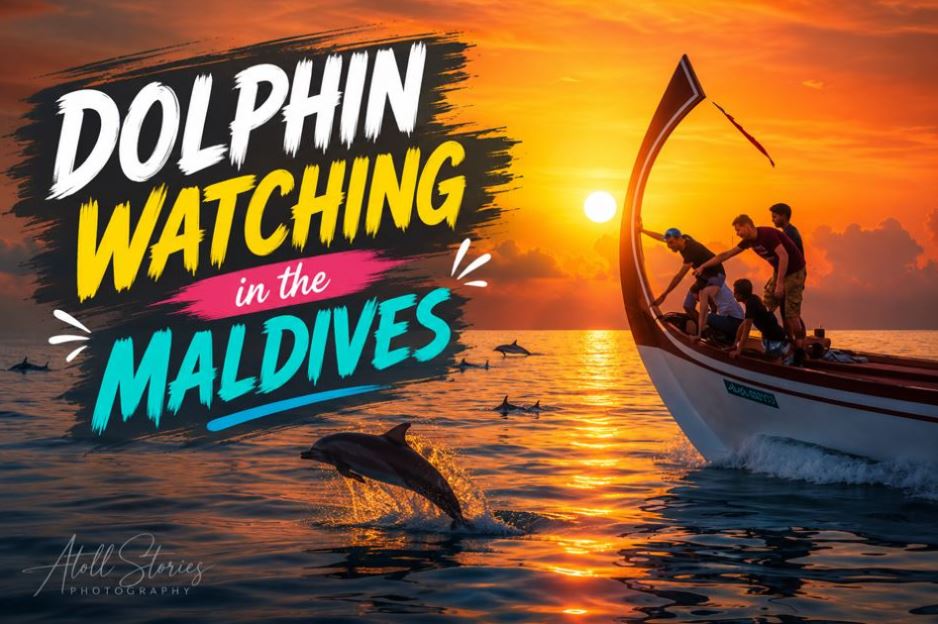
- Sunset Cruises: Booking a dedicated sunset dolphin cruise combines the thrill of wildlife sightings with breathtaking, unobstructed views of the Maldivian golden hour.
                       MALDIVES DOLPHIN ENCOUNTERS
                                    |
          +-------------------------+-------------------------+
          |                                                   |
          v                                                   v
   ETHICAL WATCHING                                   RESPONSIBLE SWIMMING
  • 50-meter safety buffer                           • Small groups only
  • Strict 30-minute limit                           • Avoid pods with calves
  • No chasing/corraling                             • Allow dolphins to approach
Dolphin Watching vs. Swimming: Ethical Marine Tourism
Interacting with wild cetaceans requires strict adherence to eco-friendly guidelines to protect their natural habitats.
Ethical Dolphin Watching Guidelines
Responsible resorts, such as Gili Lankanfushi, enforce strict marine protection protocols to minimize human disturbance:
- Maintain Distance: Boats must keep a minimum buffer of 50 meters.
- No Chasing: Captains must cut or idle engines and avoid sudden directional changes or cutting off a pod’s path.
- Time Limits: Observations are strictly limited to 30 minutes per vessel to avoid stressing the animals.
Swimming with Dolphins in the Maldives
Some excursions, such as those operated by The Pearl Seaview on Fulidhoo, allow guided swimming encounters in small groups. While spinner dolphins are naturally curious and may choose to approach swimmers, it is crucial to never approach pods with calves. Protective mothers can become stressed, disrupting vital nursing and resting cycles.
Conservation and Environmental Threats
Despite the Maldives being a sanctuary, marine mammals face rising ecological pressures:
- Unregulated Tourism: Overcrowding by boats chasing pods can alter natural dolphin behaviors, causing chronic stress.
- Ocean Noise & Boat Traffic: Increased vessel noise disrupts the echolocation dolphins use to communicate, navigate, and hunt.
- Plastic Pollution: Microplastics and marine debris threaten habitats and pose ingestion risks.
By booking with operators certified in sustainable tourism and supporting Marine Protected Areas (MPAs), travelers directly contribute to safeguarding these ecosystems for generations to come.
Essential Travel Tips for Your Dolphin Excursion
- Choose Reputable Operators: Always book through eco-conscious providers (like Gili Lankanfushi or The Pearl Seaview) that openly prioritize marine welfare.
- Look for Nature’s Clues: Keep your eyes peeled for “footprints”—smooth, oily slicks on the water’s surface left by a dolphin’s tail—or flocks of marine birds circling overhead, which indicates a feeding frenzy below.
- Pack Mindfully: Bring reef-safe sunscreen, polarized sunglasses (to cut water glare), binoculars, and a reusable water bottle to reduce single-use plastic waste.
- Try the Local Tradition: Maldivian dhoni crews have a time-honored trick: rhythmic clapping. Local lore says dolphins love the sound and will swim closer to bow-ride—give it a try on your cruise!
Unique Ways to Experience Dolphins
If a standard two-hour excursion isn’t enough, consider booking a multi-day liveaboard safari. These diving and snorkeling vessels cruise between remote atolls, allowing you to wake up to wild dolphin pods right outside your cabin window.
The Maldives offers an unparalleled opportunity to connect with dolphins in their natural habitat. By practicing responsible tourism, you ensure these enchanting marine encounters remain wild, safe, and sustainable.