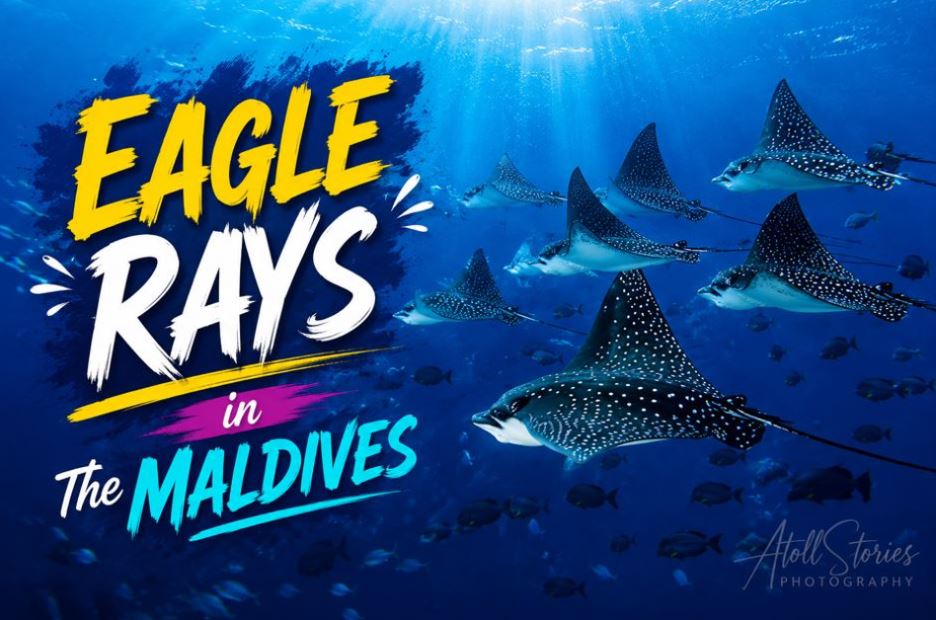
The Ultimate Guide to Encountering Eagle Rays in the Maldives
The Maldives, a paradise of crystal-clear waters and vibrant coral reefs, is home to some of the ocean’s most mesmerizing creatures. Among them, the eagle ray stands out as a symbol of elegance and mystery.
With their diamond-shaped bodies and effortless gliding, these creatures captivate divers and snorkelers alike. Whether you are planning a luxury dive trip or a tropical snorkeling safari, here is your ultimate guide to understanding, spotting, and ethically encountering eagle rays in this tropical haven.
1. Meet the Eagle Rays of the Maldives
Eagle rays are part of the cartilaginous fish family, making them close relatives of sharks and manta rays. Recognizable by their pointed pectoral fins and striking dorsal patterns, they glide through the water like underwater birds.
While exploring Maldivian waters, you are most likely to encounter two distinct species:
- Spotted Eagle Rays (Aetobatus narinari): This is the most common species you will encounter. They feature a dramatic dark blue or black back covered in white spots. Including their long, whip-like tails, they can reach lengths of up to 16.4 feet (5 meters).
- Ornate Eagle Rays (Aetobatus ocellatus): Incredibly rare and visually stunning, these rays feature intricate, reticulated patterns. A famous sighting at OZEN Life Maadhoo marked one of the few documented encounters of this elusive species in the archipelago.
2. Best Places and Times to Spot Eagle Rays
Eagle rays favor warm coastal waters, thriving around coral reefs, deep channels, and sandy lagoons. If you want to maximize your chances of swimming alongside a squadron of rays, consider booking your stay at these top Maldives hotspots:
| Hotspot / Resort | Best Time to Visit | What to Expect |
| Milaidhoo Island (Baa Atoll) | August to February | Frequent sightings at the house reef and jetty area, especially during medium-to-strong currents. |
| South Ari Atoll | December to April | Prime conditions near cleaning stations and shallow lagoons. |
| Huvadhoo Atoll | Peak Maldivian Dry Season | Famous for deep channels where divers regularly report massive schools of 20+ rays. |
| Baros Maldives | Year-Round | Stronger currents on the house reef allow snorkelers to effortlessly drift alongside resident rays. |
3. Fascinating Behaviors and Unique Traits
Feeding Habits
Unlike their filter-feeding cousins, the manta rays, eagle rays are benthic feeders. They hunt for crustaceans, mollusks, and crabs buried deep in the sand. Using their specialized, shovel-like snouts, they dig into the seabed, often leaving distinct crater-like marks behind.
Acrobatic Breaching
One of the most thrilling sights in the Maldives is watching an eagle ray leap completely out of the water. While scientists still debate whether they breach to escape predators, remove parasites, or communicate, it remains an unforgettable spectacle for lucky onlookers.
Social Dynamics
While spotted eagle rays are frequently seen cruising solo, they are highly social during migrations or when navigating high-current channels, forming mesmerizing, synchronized groups known as “squadrons.”
A Diver’s Tale: Swimming with Giants
Renowned underwater photographer Stefan Beskow recalls a drift dive through the channels of Huvadhoo Atoll when a squadron of 20 spotted eagle rays appeared out of the blue. “They moved like synchronized dancers,” he describes—a testament to the pure magic of Maldivian waters.
4. Insider Tips for Snorkelers and Divers
To get the most out of your underwater safari, keep these practical tips in mind:
- Embrace the Current: Eagle rays love currents because they bring in nutrients and small prey. Let the ocean flow carry you. Resorts like Baros Maldives offer guided drift snorkels where you can glide effortlessly right next to them.
- Perfect Your Photography: If you are shooting with an underwater camera, switch to a wide-angle lens. This allows you to capture their expansive wingspan and distinct spotted patterns without getting too close.
- Try a Night Snorkel: Some luxury eco-resorts, such as Milaidhoo, offer guided night snorkeling excursions. Eagle rays often move into shallower reef flats under the cover of darkness to forage for food.
5. Marine Conservation and Ethical Encounters
Despite their status as bucket-list marine life, eagle rays face global threats from habitat degradation and overfishing. The Maldives takes marine conservation seriously, protecting these creatures through strict regulations and Marine Protected Areas (MPAs).
When swimming with eagle rays, always practice sustainable tourism:
- Maintain Passive Observation: Never chase, corner, or attempt to touch a ray. Resorts like Gili Lankanfushi heavily emphasize a look-but-don’t-touch policy.
- Approach Calmly: Sudden movements or loud splashing will startle them, causing the school to swim away into deeper water.
- Contribute to Citizen Science: If you capture clear photos of an eagle ray’s unique spot pattern, you can submit them to local marine biology centers. Your data helps marine biologists track regional populations and migration habits.
Conclusion
Eagle rays are more than just a beautiful photo opportunity; they are vital ambassadors of the Maldives’ thriving marine ecosystems. Whether you are drifting through the deep channels of Huvadhoo or watching the reef flats from a luxury overwater villa, an encounter with these graceful giants promises a memory that will last a lifetime.
Ready to dive in? Start planning your Maldivian getaway today by exploring eco-conscious luxury resorts and liveaboards—and don’t forget to pack your underwater camera!