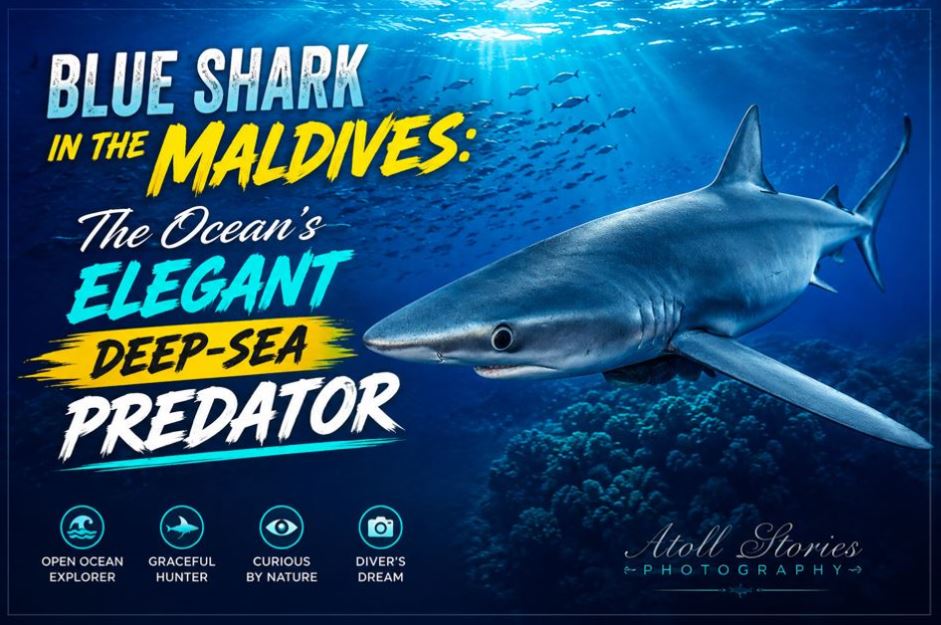
Blue Shark in the Maldives: The Ocean’s Elegant Deep-Sea Predator
The Maldives is world-famous for its crystal-clear lagoons, colorful coral reefs, and incredible marine biodiversity. Among the many fascinating shark species found in Maldivian waters, the Blue Shark stands out as one of the most graceful and mysterious pelagic predators in the Indian Ocean. Belonging to the Carcharhinidae family, the Blue Shark is admired for its sleek body, deep blue coloration, and remarkable oceanic migrations.
Whether you are a diver, marine enthusiast, underwater photographer, or traveler planning a shark-diving adventure, this guide explores everything you need to know about Blue Sharks in the Maldives.
What Is a Blue Shark?
The Blue Shark, scientifically known as Prionace glauca, is a species of requiem shark belonging to the family Carcharhinidae. It is easily recognized by its long slender body, pointed snout, large black eyes, and vibrant metallic-blue color that fades into a white belly.
Blue Sharks are considered highly migratory pelagic sharks, meaning they spend most of their lives in the open ocean rather than near coral reefs or coastlines.
Quick Facts About the Blue Shark
| Feature | Details |
|---|---|
| Scientific Name | Prionace glauca |
| Family | Carcharhinidae |
| Common Name | Blue Shark |
| Average Length | 2 – 3.5 meters |
| Maximum Length | Up to 4 meters |
| Habitat | Open ocean and deep offshore waters |
| Diet | Squid, fish, crustaceans |
| Conservation Status | Near Threatened |
| Behavior | Curious but generally non-aggressive |
Blue Sharks in the Maldives
The Maldives lies in the heart of the Indian Ocean, making it an important migration route for many pelagic species, including Blue Sharks. Although not as commonly encountered as reef sharks or whale sharks, Blue Sharks occasionally appear in deeper offshore channels around the atolls.
Most sightings occur far from shallow lagoons and coral reefs, especially in areas where deep ocean currents bring nutrient-rich waters close to the islands.
Where to See Blue Sharks in the Maldives
Blue Shark sightings are relatively rare compared to other shark species in the Maldives, but experienced divers and liveaboard operators sometimes encounter them in offshore waters.
Best Locations for Blue Shark Encounters
- South Ari Atoll
- Fuvahmulah
- Addu Atoll
- Deep channels near outer atolls
- Offshore liveaboard dive routes
Fuvahmulah is especially famous for pelagic shark encounters and is considered one of the best places in the Maldives to potentially spot oceanic species like Blue Sharks.
Blue Shark Appearance
Blue Sharks are among the most visually striking sharks in the ocean.
Distinctive Features
- Brilliant deep blue upper body
- White underside for camouflage
- Long pectoral fins
- Slim torpedo-shaped body
- Large dark eyes adapted for deep-water hunting
- Pointed elongated snout
Their coloration helps them blend into the ocean from above and below, making them efficient predators in open water.
Blue Shark Behavior
Blue Sharks are generally calm and curious animals. Divers often describe them as graceful swimmers that circle slowly and investigate cautiously.
Unlike aggressive shark species, Blue Sharks are not considered dangerous to humans under normal circumstances. However, as with all wild marine predators, respectful distance and proper diving behavior are essential.
Interesting Behavioral Traits
- Highly migratory across entire oceans
- Often travel thousands of kilometers
- Can dive to depths over 300 meters
- Frequently follow squid populations
- Known for curious interactions with divers
What Do Blue Sharks Eat?
Blue Sharks are opportunistic predators that feed mainly in the open ocean.
Common Prey
- Squid
- Small tuna
- Mackerel
- Flying fish
- Crustaceans
- Small sharks
Squid makes up a large portion of their diet, especially in deeper waters around the Maldives.
Diving with Blue Sharks in the Maldives
Seeing a Blue Shark while diving in the Maldives is considered a special and unforgettable experience. Since they inhabit offshore waters, encounters are more common during:
- Liveaboard expeditions
- Pelagic shark dives
- Deep ocean drift dives
- Specialized shark-diving trips
Safety Tips for Divers
- Stay calm and avoid sudden movements
- Never chase or touch sharks
- Follow your dive guide’s instructions
- Maintain good buoyancy control
- Respect wildlife at all times
Blue Sharks are naturally curious, and calm behavior often results in better underwater encounters and photography opportunities.
Best Time to See Blue Sharks
Blue Sharks can appear year-round in Maldivian waters, but sightings are more likely during periods of stronger oceanic currents and cooler nutrient-rich water movement.
Recommended Seasons
- November to April
- During pelagic migration periods
- Offshore excursions in deeper channels
Ocean conditions and shark activity can vary annually depending on currents, temperature, and prey availability.
Importance of Blue Sharks in Marine Ecosystems
As apex and mesopredators, Blue Sharks play a crucial role in maintaining healthy marine ecosystems. They help regulate fish populations and support the natural balance of the open ocean food chain.
Healthy shark populations are vital for the long-term sustainability of coral reef ecosystems and fisheries in the Maldives.
Threats Facing Blue Sharks
Unfortunately, Blue Sharks face serious threats globally.
Major Threats
- Overfishing
- Shark finning
- Longline fishing bycatch
- Ocean pollution
- Climate change
Millions of Blue Sharks are accidentally caught every year in commercial fisheries worldwide, contributing to population declines.
Shark Conservation in the Maldives
The Maldives is recognized as one of the world’s leading shark conservation destinations. In 2010, the country declared its entire Exclusive Economic Zone a shark sanctuary, banning shark fishing nationwide.
This protection helps conserve important species including:
- Blue Sharks
- Whale Sharks
- Tiger Sharks
- Hammerhead Sharks
- Reef Sharks
Marine conservation efforts in the Maldives continue to support sustainable tourism and ocean biodiversity protection.
Why Blue Sharks Fascinate Ocean Lovers
Blue Sharks are symbols of the vast open ocean. Their elegant appearance, long migrations, and mysterious deep-sea lifestyle make them one of the most captivating sharks on Earth.
For underwater photographers and divers visiting the Maldives, a Blue Shark encounter represents a rare and magical marine experience.
Final Thoughts
The Blue Shark is one of the Indian Ocean’s most beautiful pelagic predators. Although sightings in the Maldives are less common than reef shark encounters, they remain an exciting possibility for adventurous divers exploring deeper offshore waters.
With strong marine conservation measures and growing awareness about shark protection, the Maldives continues to be one of the best destinations in the world for appreciating these magnificent ocean animals in their natural habitat.
If you dream of encountering sleek blue predators gliding through the deep Indian Ocean, the Maldives may offer the unforgettable shark-diving experience of a lifetime.